1950/51
Hooter music on CSIRAC and the Ferranti Mark 1
Geoff Hill (CSIRAC, Sydney); Christopher Strachey (Ferranti Mark 1, Manchester)
warning / end-of-job speaker → melody instrument
Both early computers had a loudspeaker meant to signal warnings or a finished program. Geoff Hill pulsed CSIRAC's "hooter" in timed loops so that it played tunes, and it performed "Colonel Bogey" at a Sydney computing conference on 7–9 August 1951. In Manchester, Strachey used the Mark 1's "Hoot" instruction to end his draughts program with "God Save the King", and a BBC recording from autumn 1951 survives.
→ Univ. of Melbourne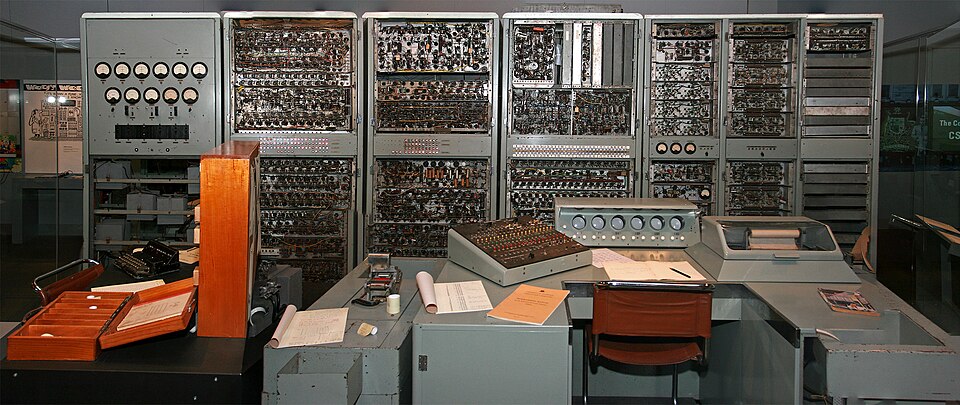
1953
Love-letter generator
Christopher Strachey
scientific computing machine → love letters
On the Ferranti Mark 1 at Manchester University, Strachey wrote a program that calculates nothing. It combines words from lists into love letters, each signed "M.U.C." for Manchester University Computer.
→ Poetry Foundation1958
Tennis for Two
William Higinbotham, with technician Robert V. Dvorak
analog trajectory computer → tennis game for a lab open house
For Brookhaven National Laboratory's visitors' day on 18 October 1958, Higinbotham wired a Donner Model 30 analog computer, normally used for trajectory calculations, to an oscilloscope. Visitors played a side-view tennis match with knobs and buttons. The setup was dismantled after two years.
→ Wikipedia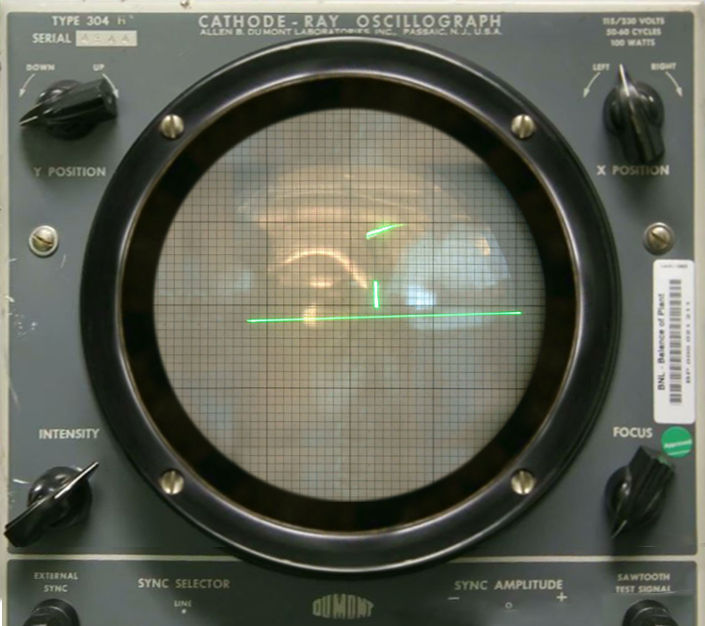
1959
Stochastische Texte
Theo Lutz
scientific computer (Zuse Z22) → poetry from Kafka
At the Technische Hochschule Stuttgart, Lutz programmed a Zuse Z22 to recombine 16 nouns and 16 adjectives from Kafka's The Castle, plus conjunctions and pronouns, into random sentences. The result appeared in the magazine augenblick in autumn 1959. It is one of the first computer-generated literary texts.
→ ZKM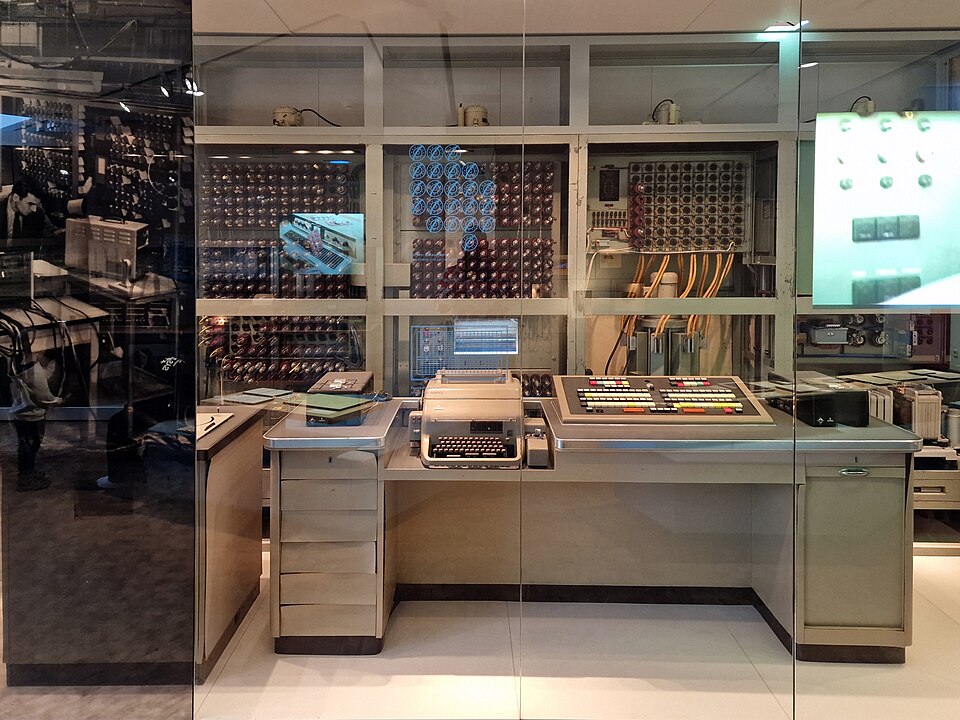
1960s–1970
IBM 1403 line-printer music
IBM 1401 programmers; songs coded on punch cards by Ron Mak (recorded 1970)
business line printer → musical instrument
Timing the hammer strikes of IBM's high-speed 1403 printer turned it into a crude synthesizer: striking every 1/440 second gives the note A. Decks of punch cards played pop songs. The Computer History Museum holds 1970 recordings and revived the program on its restored 1401 in 2019.
→ righto.com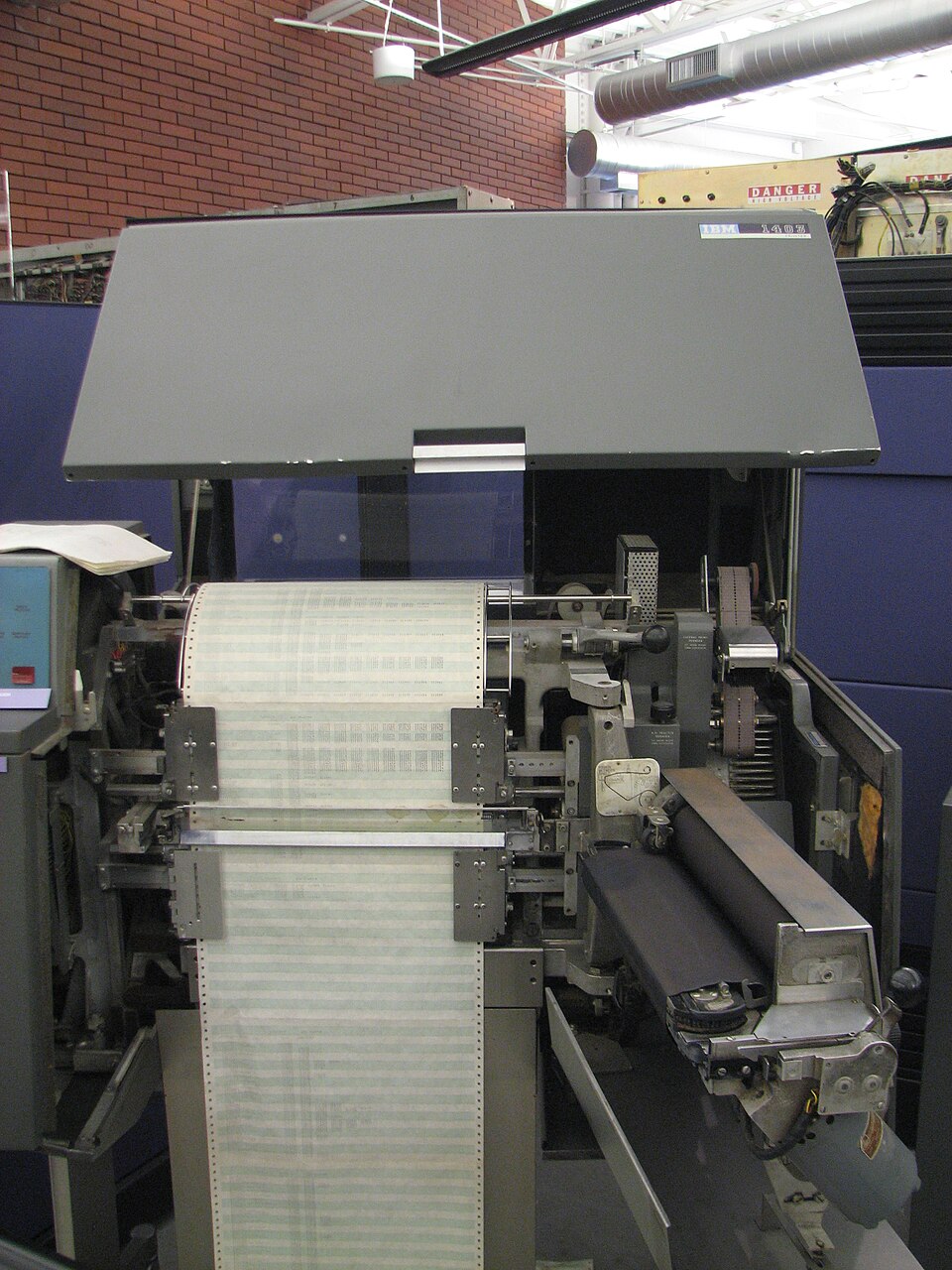
1961
Darwin
Victor Vyssotsky, Robert Morris Sr., M. Douglas McIlroy
corporate research mainframe → arena where programs fight
At Bell Labs, colleagues wrote machine-code programs that were loaded into shared memory on an IBM 7090, where they hunted rival programs and copied themselves; an umpire program enforced the rules. The game was published in 1972 and is a precursor of Core War.
→ Wikipedia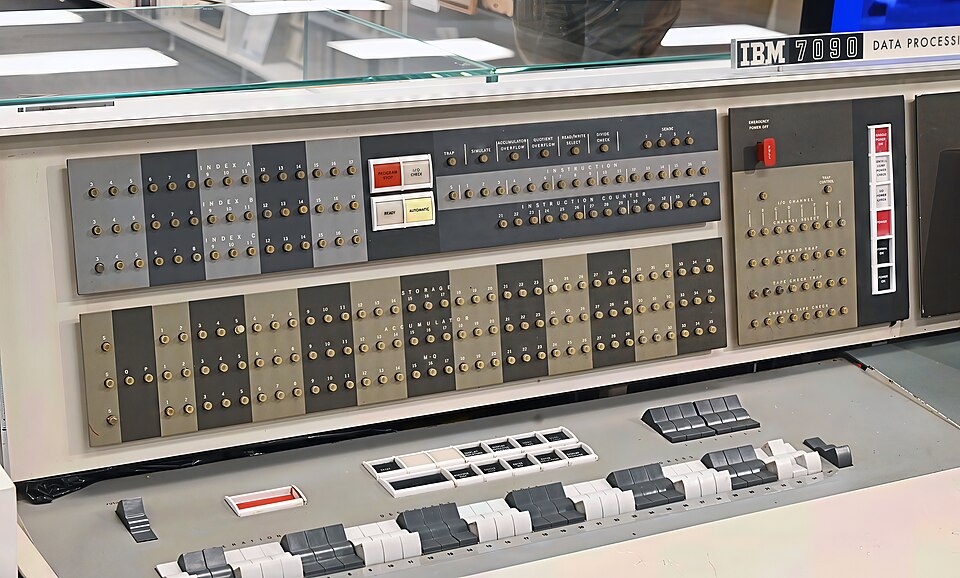
1961/62
Drawing machines
Desmond Paul Henry
WWII bombsight computer → abstract drawing machine
In 1952 Henry bought a Sperry bombsight analogue computer from an army-surplus warehouse in Manchester. In 1961 he converted it into a machine that produced abstract drawings. His prize show "Ideographs" opened at the Reid Gallery, London, on 30 August 1962, one of the earliest exhibitions of machine-made art.
→ Wikipedia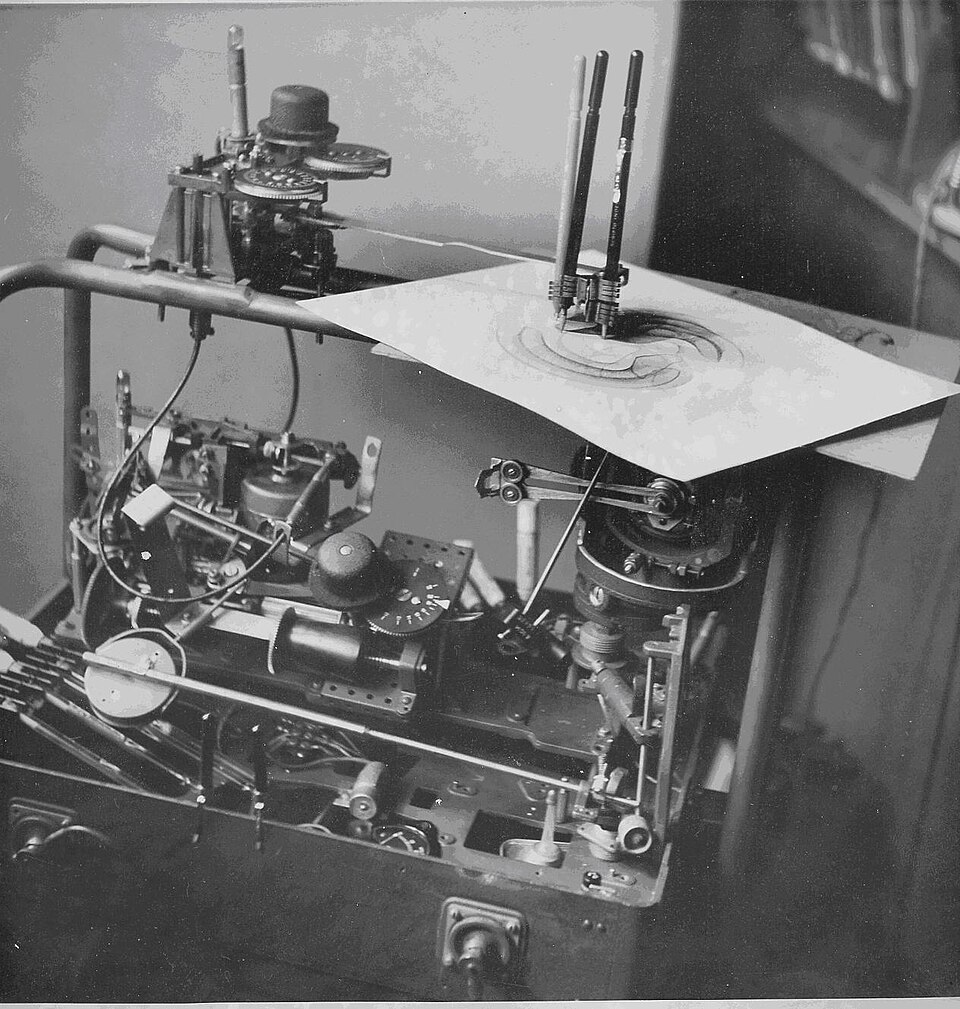
1962
Spacewar!
Steve Russell, Martin Graetz, Wayne Wiitanen, with Peter Samson and Dan Edwards
research minicomputer → space duel
On the PDP-1 at MIT, a group of young programmers turned one of the first interactive computers with a vector screen into a two-player spaceship fight with gravity and a star field. Russell wrote the first version in 1961–62, and others added the accurate star map and the sun's gravity in spring 1962. It became the standard demonstration program for showing what the PDP-1 could do and spread to installations across the US.
→ Computer History Museum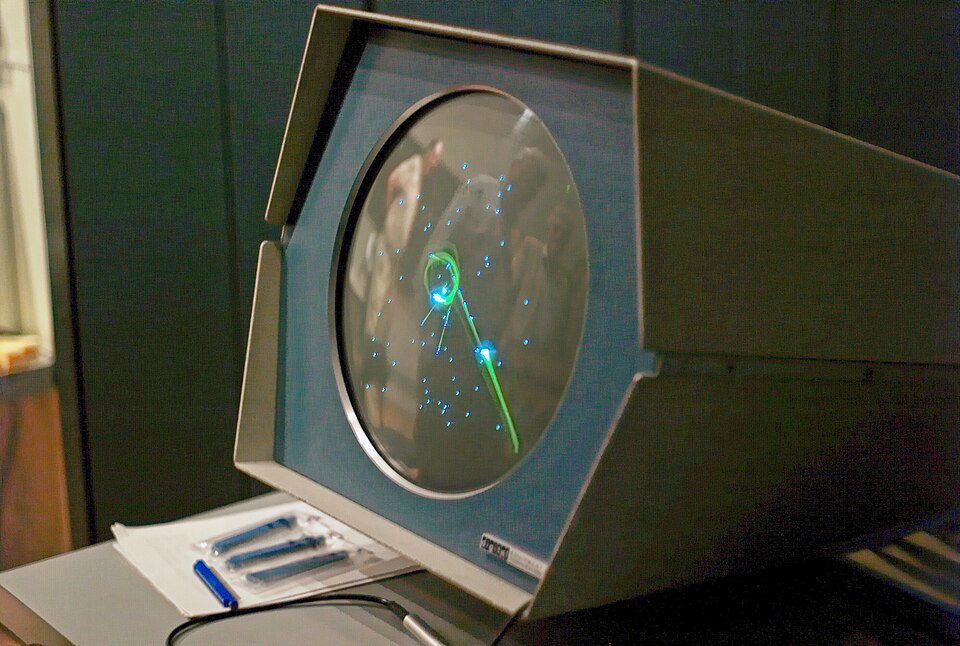
1964–66
ELIZA / DOCTOR
Joseph Weizenbaum
proof that machine "understanding" is shallow → confidant and therapist
Weizenbaum wrote ELIZA's psychotherapist script at MIT partly to show that communication between human and machine is superficial. Users, including his own secretary, confided in it anyway, and psychiatrists proposed automated therapy. The reaction turned him into one of computing's sharpest critics.
→ Wikipedia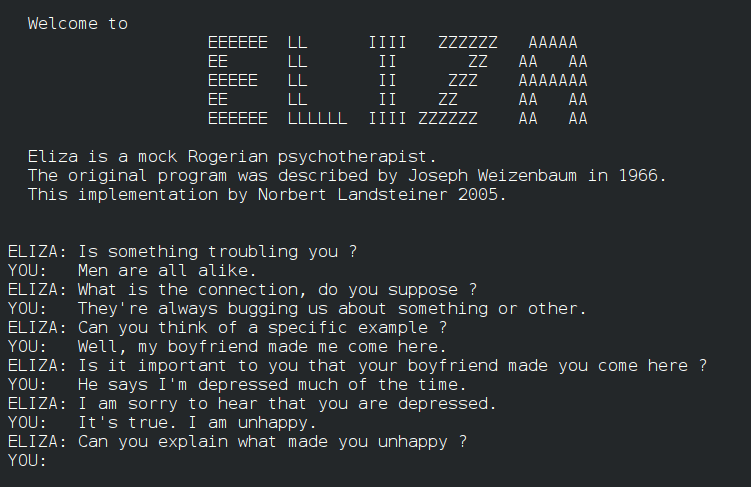
1966/67
Studies in Perception I ("Computer Nude")
Leon Harmon, Ken Knowlton
perception-research scanner → prank nude
Two Bell Labs researchers scanned a photograph of the dancer Deborah Hay and had a computer rebuild it from small symbols acting as grey tones. They hung the 12-foot print in their director's office as a joke, and he had it taken down. It then appeared in the New York Times in October 1967 and at MoMA in 1968.
→ ETHW1972
INTERCAL
Don Woods, James M. Lyon
programming language → parody designed to be unusable
Two Princeton students invented a language meant to share nothing with any other major language. The compiler rejects programs that say PLEASE too rarely, as impolite, or too often, as grovelling. INTERCAL anticipated the later scene of esoteric programming languages.
→ Wikipedia1975
Altair plays "Fool on the Hill"
Steve Dompier
radio interference from a computer → music on an AM radio
The Altair 8800 kit had no screen or speaker, but it disturbed nearby radios. Dompier wrote loops that shaped this interference into notes, and on 16 April 1975 the box played the Beatles through a transistor radio at the Homebrew Computer Club.
→ DigiBarn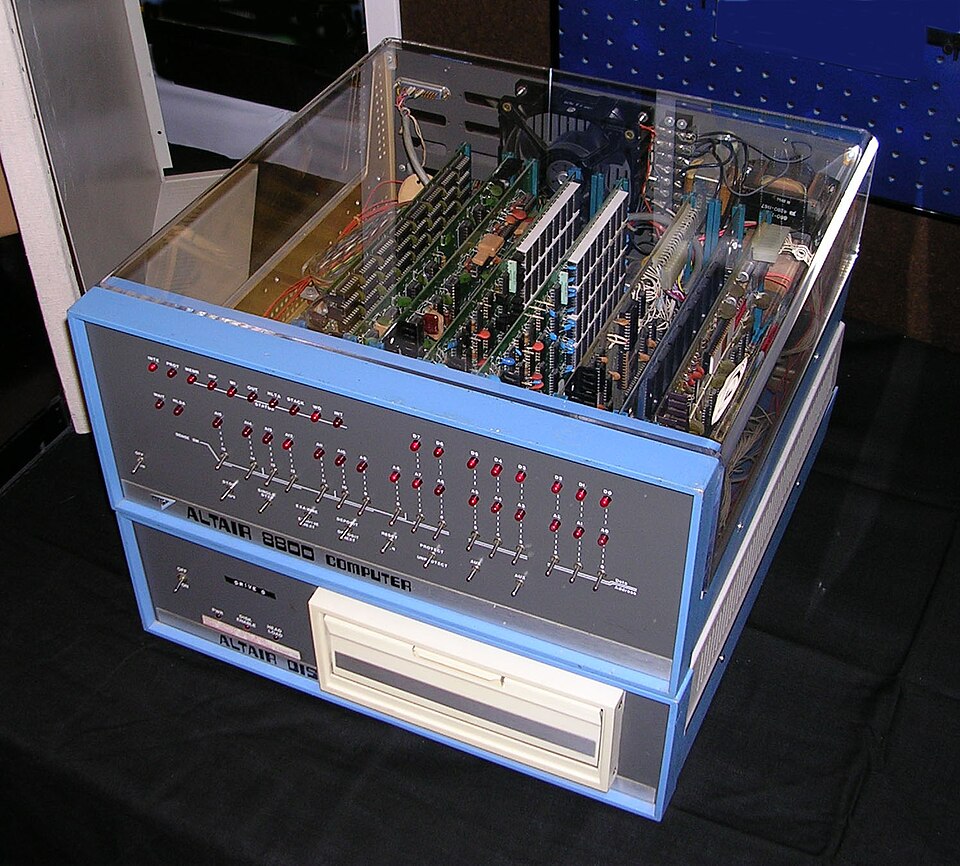
1979
Easter egg in Adventure
Warren Robinett
anonymous corporate game cartridge → hidden signature against uncredited labour
Atari did not credit its programmers, so Robinett hid a secret room reading "Created by Warren Robinett" in the Atari 2600 game Adventure. A 15-year-old player found it and wrote to Atari. The company kept the room and started calling such features "Easter eggs".
→ Wikipedia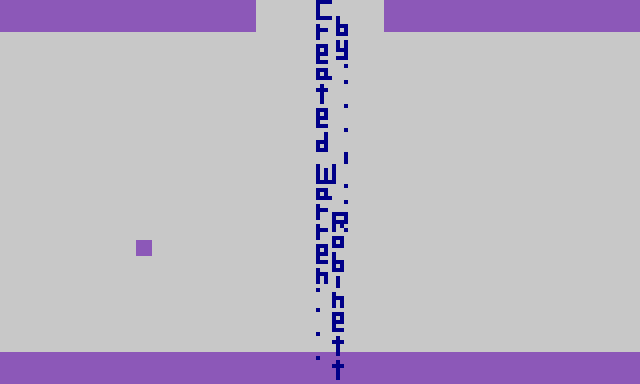
1980
The printer with the paper jam
Richard Stallman
annoyance with a printer → free software
At the MIT AI Lab, Stallman and colleagues were refused the source code for a newly installed Xerox 9700 laser printer, so they could not add the jam alerts they had built for the old printer. Stallman announced the GNU project in September 1983.
→ Wikipedia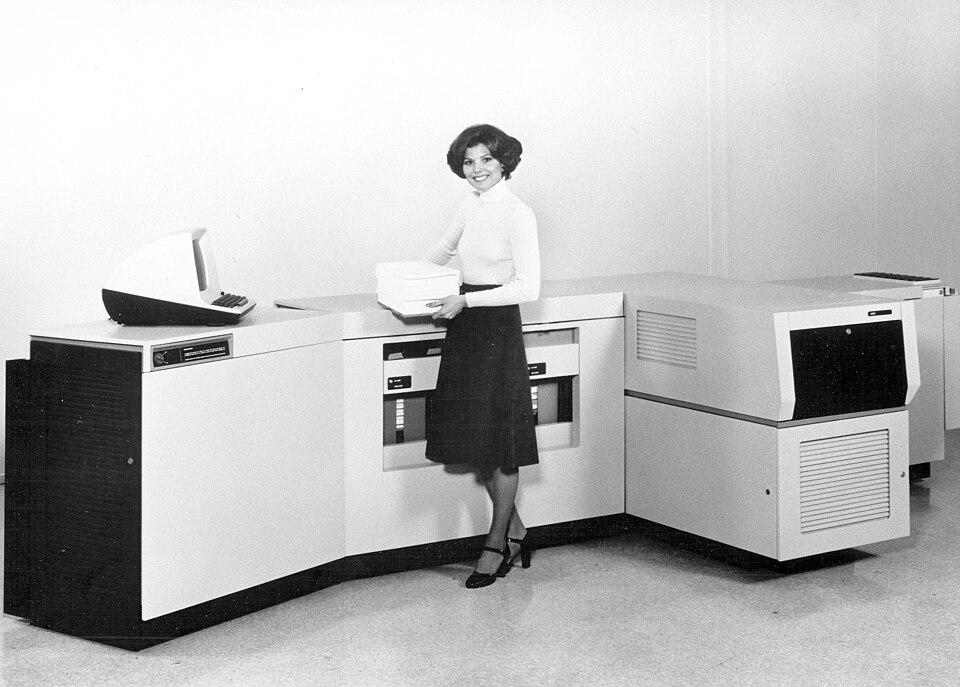
c. 1980–85
Crack intros
anonymous cracking groups
removing copy protection → signature art → demoscene
Crackers who stripped copy protection from games signed their work with short animated intros with scrollers and music, first on the Apple II and then on the C64, ZX Spectrum, Amstrad CPC and Amiga. Coders began making intros without any crack, purely to show skill, and the practice detached into the demoscene.
→ Wikipedia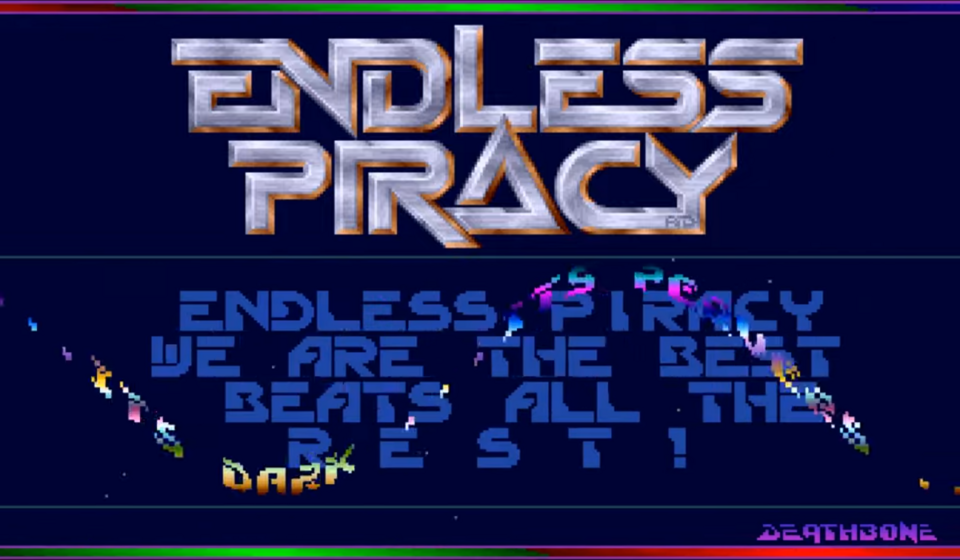
1980
BASICODE on Hobbyscoop
NOS / Hobbyscoop (Dutch public radio)
Computer program on cassette → public radio broadcast
Dutch broadcaster NOS had been sending programs by radio since 1979 and in 1980 its show Hobbyscoop launched BASICODE, a common BASIC subset that many home computers could load. Listeners recorded the broadcast tones on cassette and loaded them into their machines. The scheme spread to the GDR, where programs were broadcast until about 1992.
→ Wikipedia: BASICODE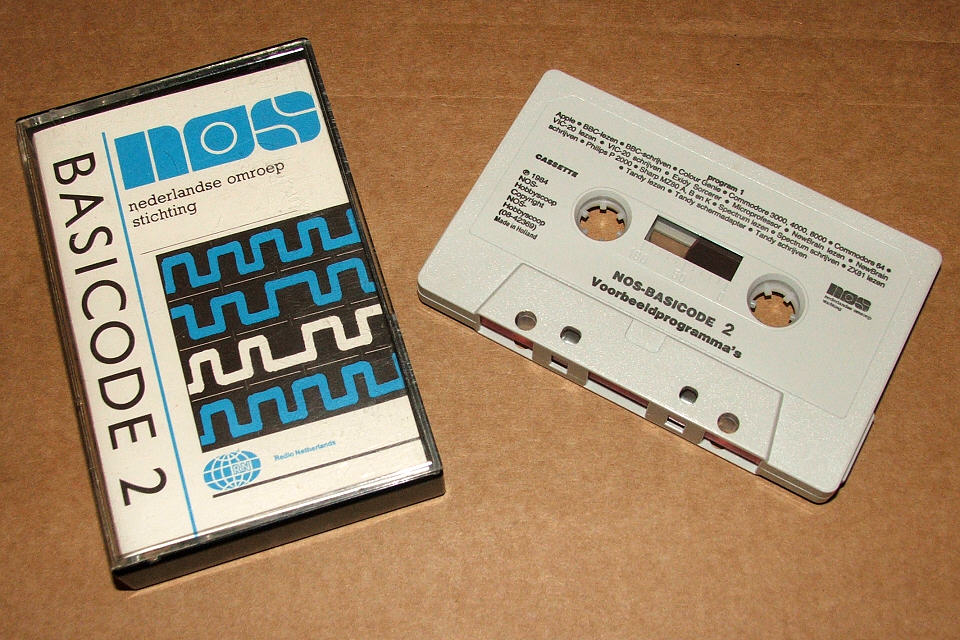
1983
Camouflage (ZX81 B-side)
Chris Sievey
Pop single → software carrier
The B-side of Chris Sievey's single held three ZX81 programs stored as audio tones, including the game Flying Train. The third program was an animated video meant to be run on the ZX81 while the A-side played. It was billed as the world's first computer promo.
→ Wikipedia: Camouflage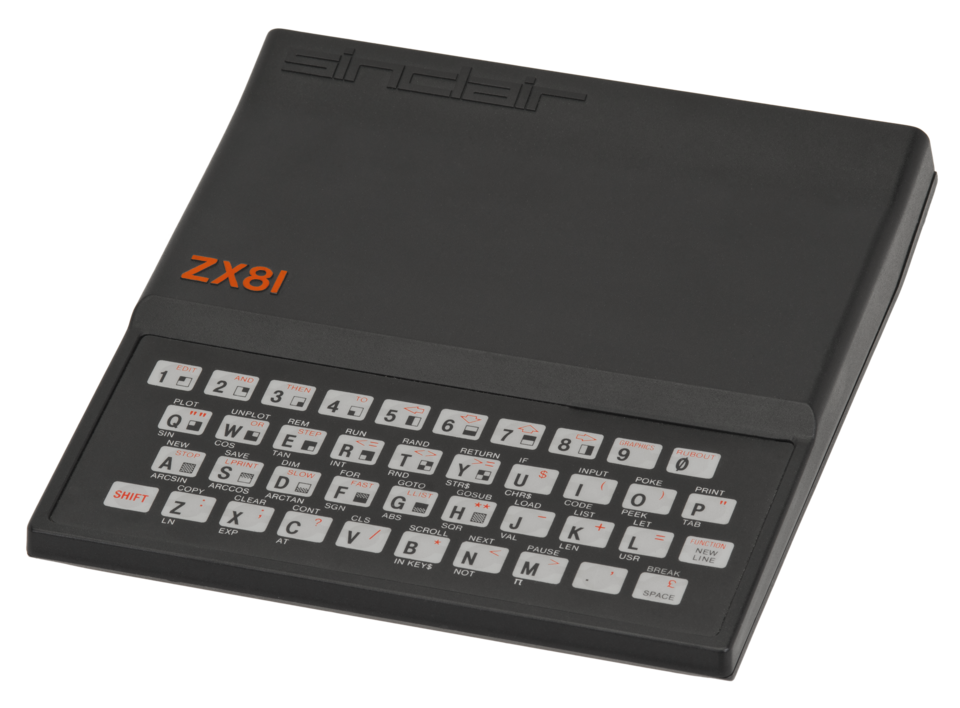
1984
The Thompson Twins Adventure
Quicksilva (David Shea)
Magazine flexi disc for music → game distribution
A ZX Spectrum text adventure about the band was pressed as a flexi disc and given away on the cover of Computer and Video Games issue 36. Readers played the record into a cassette recorder to load the game. It is one of a handful of games distributed on grooved discs.
→ Wikipedia: The Thompson Twins Adventure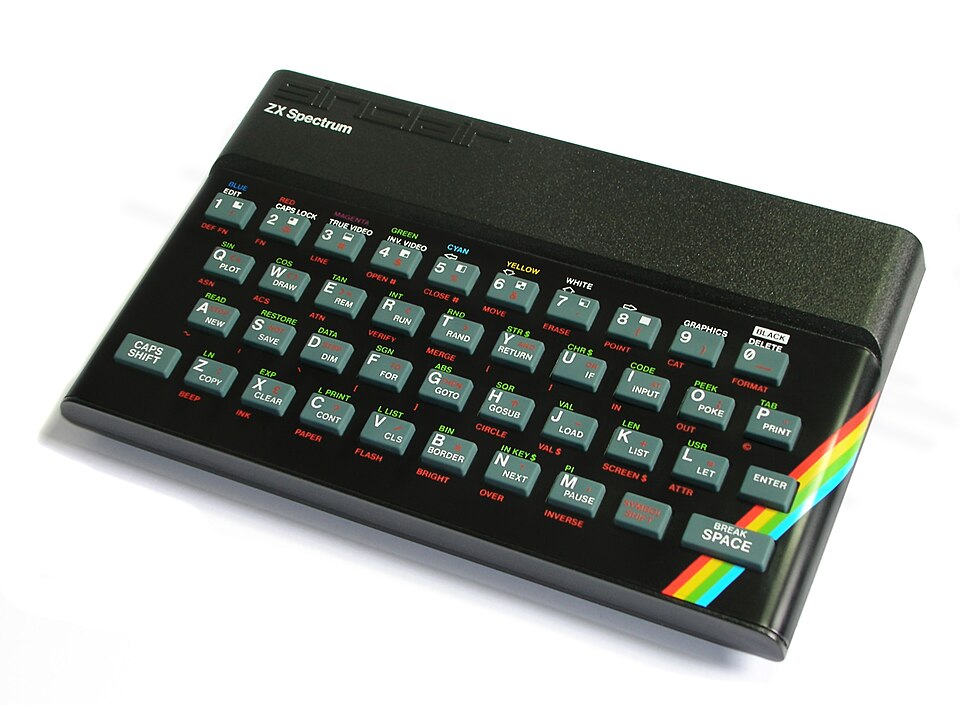
1985
Van Eck paper on display emissions
Wim van Eck
Video display → remote radio source
Wim van Eck published a paper showing that the electromagnetic emissions of video display units can be received and reconstructed at a distance. The technique became known as van Eck phreaking. It is the background for later programs that make monitors transmit on purpose.
→ CERIAS archive1987
Ultimate Soundtracker
Karsten Obarski
Amiga game-sound tool → pirated, rewritten basis of tracker and MOD music culture
A German developer wrote Ultimate Soundtracker as a tool for making Amiga game music, using the machine's four sound channels and 15 samples per song. Scene coders soon disassembled and rewrote it, producing Soundtracker II, NoiseTracker (1989) and ProTracker (1991). Its MOD file format became a standard for music in the demoscene and beyond.
→ Wikipedia1988
RealSound
Steve Witzel (Access Software)
PC speaker for beeps → digitised audio playback
RealSound used pulse-width modulation to play 6-bit digitised speech and music on the basic IBM PC speaker. It first shipped in World Class Leader Board and Echelon in 1988. The method was patented as US 5,054,086.
→ Wikipedia: RealSound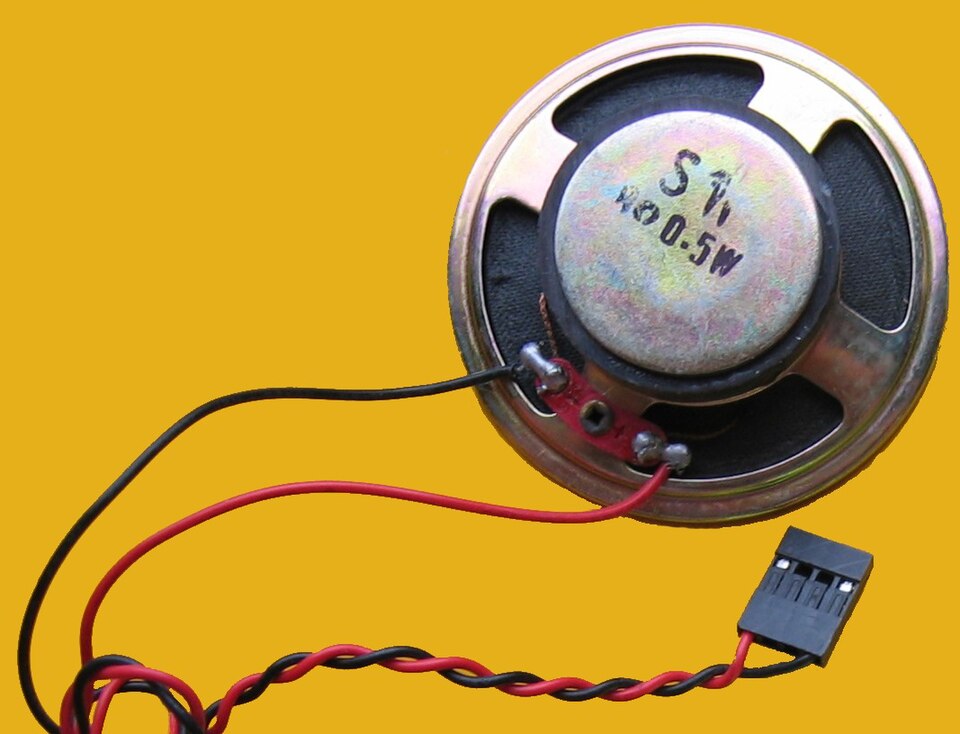
1988
Death of the Left Border
TNT Crew
Fixed video border of the Atari ST → cycle-timed tricks that force graphics into the border
The Atari ST's video chip draws a fixed border around a 320x200 picture that software was not supposed to touch. Demo coders found that switching display frequency or resolution at exactly the right CPU cycle made the chip draw graphics into the border; TNT Crew's demo is credited with first opening the left border. The Union Demo (1989) is described as the first ST screen with no borders at all.
→ Flix/Delta Force, fullscreen history1990
Beowolf
LettError (Erik van Blokland, Just van Rossum)
PostScript page description → randomness generator at print time
In the font's PostScript code, the standard "lineto" and "curveto" commands are replaced by a custom "freakto" function. Each letter is deformed at random every time it is printed, so no two prints are alike. The later OpenType version imitates this with six pre-randomised variants per glyph.
→ LettError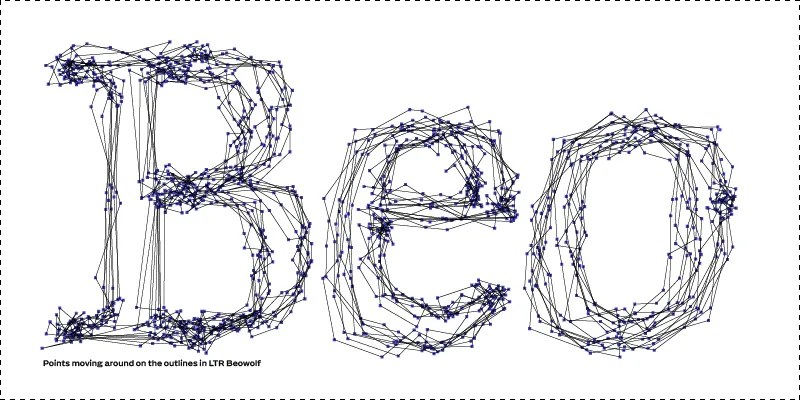
1991
Just a hobby
Linus Torvalds
a student's hobby → infrastructure of the internet
On 25 August 1991, a Helsinki student told the comp.os.minix newsgroup he was writing a free operating system, "just a hobby, won't be big and professional like gnu". That project became Linux.
→ Slashdot (20th anniversary)Hello everybody out there using minix - I'm doing a (free) operating system (just a hobby, won't be big and professional like gnu) for 386(486) AT clones.
1991–93
Computer Virus Project
Joseph Nechvatal
computer virus → painting tool
During residencies at the Louis Pasteur Atelier in Arbois and the Saline Royale in France, Nechvatal let computer viruses infect and gradually corrupt digital image files. The corrupted images were then painted onto canvas by robot. The Computer Virus Project II with Stéphane Sikora followed in 2002.
→ Wikipedia1993
Second Reality
Future Crew
IBM PC compatible business computer → platform for real-time audiovisual art
Future Crew's demo won the PC demo competition at Assembly 1993 in Finland, running real-time 3D graphics and music on a 486 PC with a sound card. Slashdot readers voted it one of the Top 10 Hacks of All Time in 1999. Its source code was later released into the public domain on GitHub.
→ Wikipedia1995
wwwwwwwww.jodi.org
JODI (Joan Heemskerk, Dirk Paesmans)
source code → picture plane
In the browser the page looks like unreadable green code on black. "View source" reveals a diagram of a nuclear bomb drawn in code characters, so the inspection tool becomes the place where the work happens.
→ Digital Canon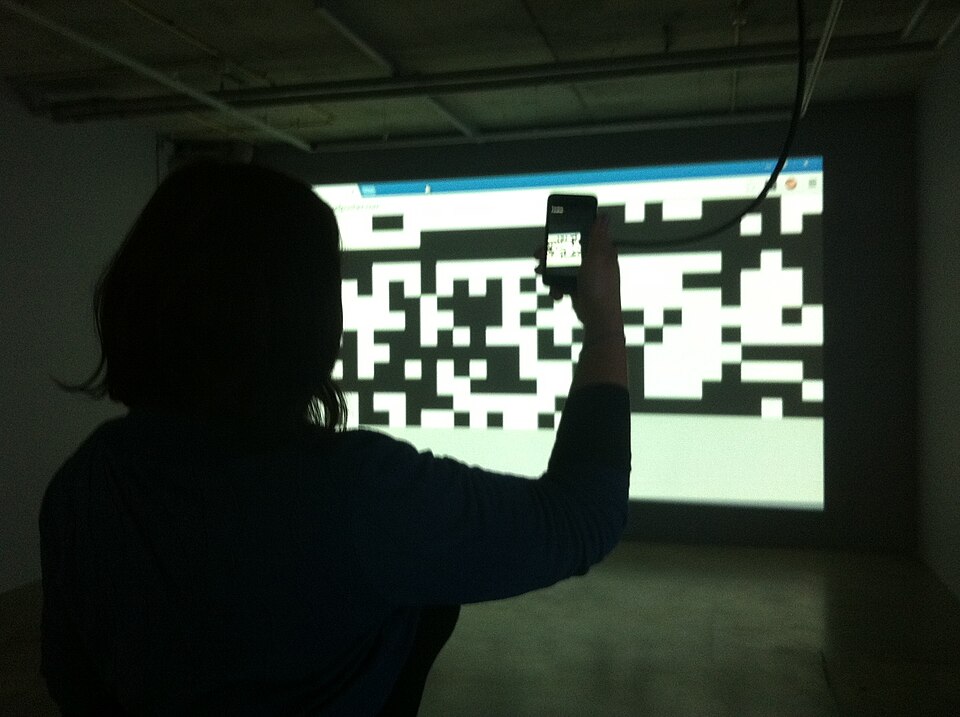
1996
My Boyfriend Came Back from the War
Olia Lialina
HTML frames → film montage
In this browser story about a couple reunited after a war, each click splits the window into smaller nested frames. A page-layout feature becomes the cut of a nonlinear film.
→ Wikipedia1996
Digital Hijack
etoy
Search engine results → art kidnapping
etoy redirected people searching popular keywords to its own pages, which told them they had been hijacked. The action won the Prix Ars Electronica Golden Nica for WWW in 1996.
→ Wikipedia1997
The Web Stalker
I/O/D (incl. Matthew Fuller)
browser → critique of the browser
An artist-made browser, offered as an alternative to Netscape and Internet Explorer, that throws away page layout. It shows instead the link structure between pages and streams of text.
→ Rhizome ArtBase1998
ASCII History of Moving Images
Vuk Ćosić
text character set → film projector
Clips from the Lumière brothers, Battleship Potemkin, King Kong, Psycho and Star Trek are converted into moving ASCII characters, green on black like an old terminal.
→ Jeu de Paume1998
Shredder 1.0
Mark Napier
web browser → abstract-painting machine
The user enters any URL, and a script shreds the page's HTML before the browser renders it, scattering text, images and code into large compositions. Napier calls the result an "action painting" of the web and names Web Stalker as an influence.
→ potatoland.org1998–
386 DX
Alexei Shulgin
obsolete office PC → rock band
An old 386 PC plays MIDI versions of rock hits while song-synthesis software sings the vocals, billed as a "cyberpunk rock band". It is in the Garage Museum collection in Moscow.
→ Rhizome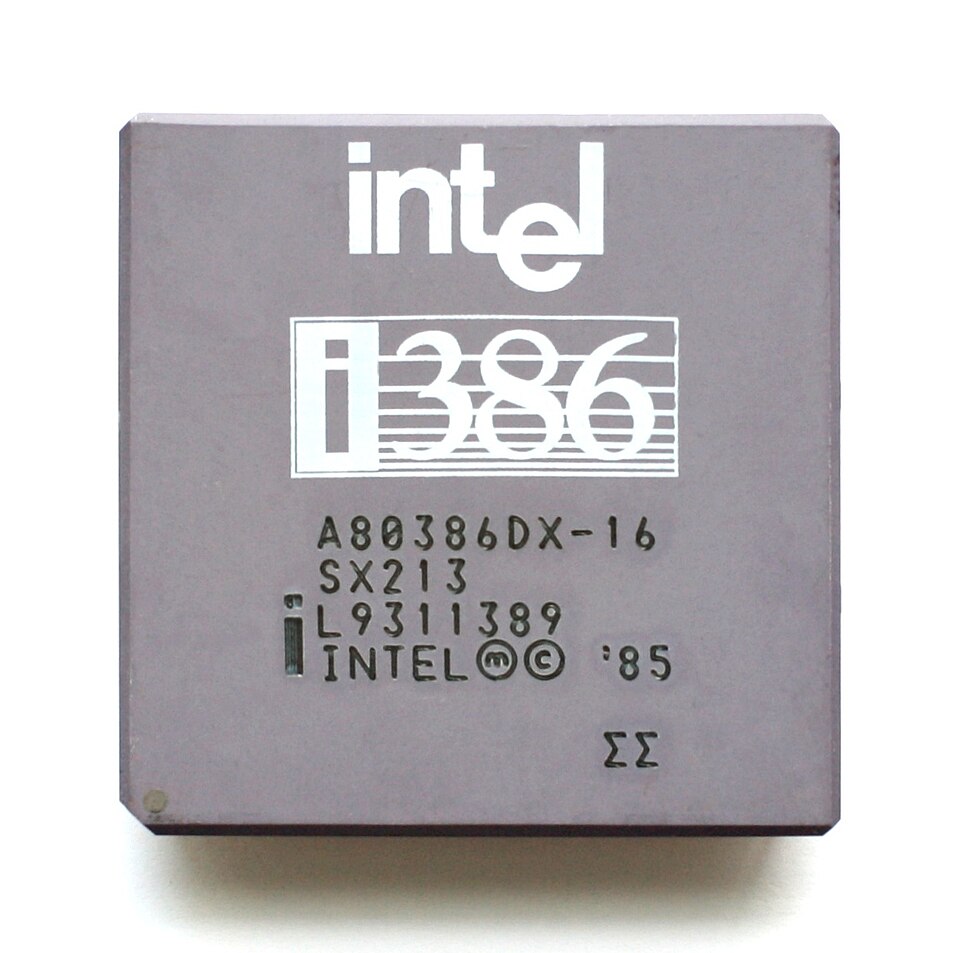
1998
FloodNet
Electronic Disturbance Theater
Denial-of-service attack → virtual sit-in
FloodNet was a Java applet that made participants' browsers reload a target site over and over. It was used in solidarity with the Zapatistas, among others against the Mexican president's website, and staged at Ars Electronica 1998.
→ Wikipedia1998
Natural Selection
Mongrel (Graham Harwood, Matthew Fuller)
Search engine → anti-racist trap
Natural Selection sat on top of other search engines and passed through only their URLs. Searches on race or eugenics terms led users into a network of sites Mongrel built to play with racist expectations.
→ nettime1999
SOD
JODI
first-person shooter → abstract black-and-white maze
JODI hacked Wolfenstein 3D via its Spear of Destiny add-on and replaced the dungeon textures with geometric black, white and grey forms. The game space becomes a disorienting, almost unnavigable abstraction.
→ Leonardo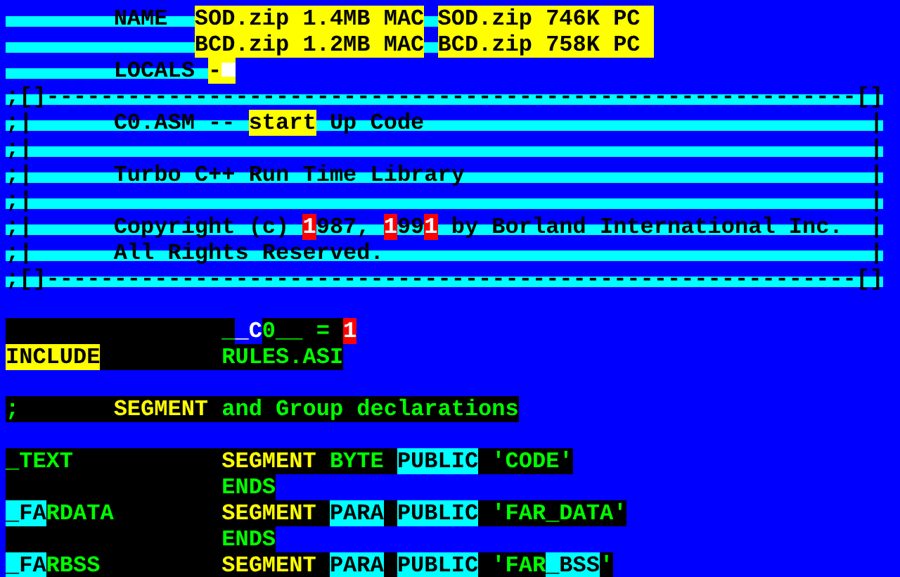
1999
Toywar
etoy
Corporate domain dispute → multiplayer online game
When the toy retailer eToys sued the art group etoy over its domain name, etoy turned the dispute into an online game with recruited agents. eToys dropped the lawsuit in early 2000.
→ Wikipedia1999
retroYou r/c
Joan Leandre
Car racing game → abstract physics painting
Leandre hacked a commercial racing game so that its physics and graphics fall apart and the cars float through abstract space. It was listed for the transmediale.02 software art award.
→ transmediale archive1999
Adam Killer
Brody Condon
First-person shooter → endless killing ritual
In this Half-Life mod the player faces many identical copies of a man in white and can only shoot them. The spreading blood turns the game into a kind of painting.
→ Wikipedia2000–03
Life Sharing
Eva & Franco Mattes
private home computer → public website
For three years the artists' entire home computer, including e-mail and bank statements, could be browsed online in real time ("file sharing = life sharing"). It went offline in 2003, and Rhizome restored an archive.
→ Rhizome Net Art Anthology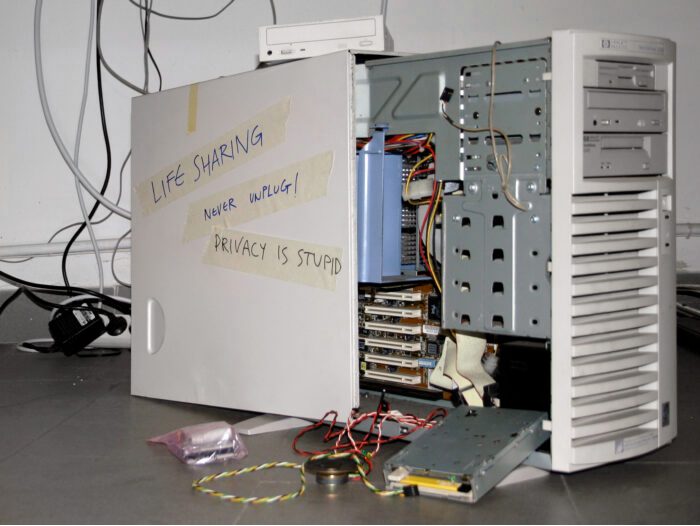
2000–
Excel paintings
Tatsuo Horiuchi
spreadsheet → Japanese landscape painting
Approaching retirement, Horiuchi began painting detailed rural landscapes with Excel's AutoShape tools. Excel was already installed and graphics software was expensive. He won first prize in the Excel Autoshape Art Contest in 2006.
→ SoraNews242000
[V]ote-auction
Ubermorgen
Online auction → vote-selling platform
During the 2000 US presidential election the site offered voters the chance to sell their votes to the highest bidder. It led to injunctions, domain shutdowns and coverage on CNN.
→ Wikipedia
2000
fr-08: .the .product
farbrausch
Windows executable as container for code → entire real-time 3D film and soundtrack generated from 64 KB
The German group farbrausch won the 64k intro competition at The Party 2000 with a real-time animated film whose program is no larger than 64 kilobytes. Instead of storing images and sound, the program generates textures, 3D scenes and synthesised music at run time.
→ pouet.net2001
Auto-Illustrator
Adrian Ward (Signwave)
vector-drawing program → software with a will of its own
A working parody of commercial design software whose tools behave semi-autonomously. It co-won the transmediale.01 "Artistic Software" award on 10 February 2001 and released its first public beta on 28 February 2001.
→ transmediale archive2001/02
Scriptographer & Hektor
Jürg Lehni (Hektor with Uli Franke)
Adobe Illustrator → programming environment
Lehni began Scriptographer in 2001: a JavaScript plug-in that made Illustrator programmable. It debuted publicly in 2002 as the software driving Hektor, a spray-can drawing machine. Scriptographer stopped working with Adobe CS6 in 2012, and its successor Paper.js launched in 2011.
→ Eye Magazine2001
biennale.py
epidemiC and 0100101110101101.org
Computer virus → exhibited artwork
A self-replicating Python virus was released at the Slovenian Pavilion on the opening day of the Venice Biennale, 6 June 2001. Its source code was printed on t-shirts and the virus was sold as an artwork.
→ SHIFT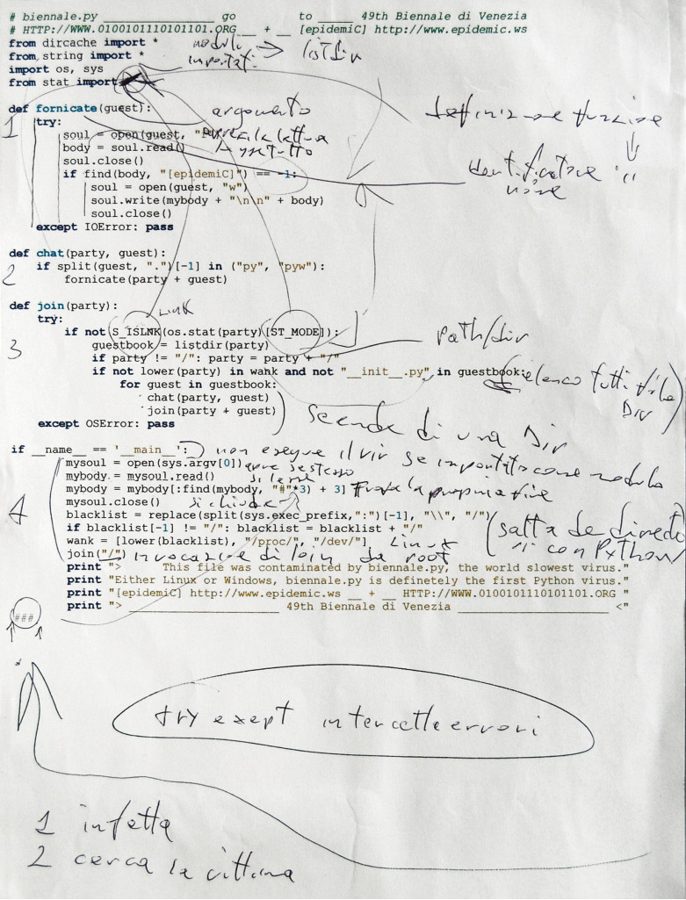
2001
Carnivore
RSG (Alex Galloway et al.)
FBI surveillance software → art data source
Named after the FBI's email wiretap program, Carnivore is a packet sniffer that passes live network traffic to artist-made clients, which turn it into images and sound. It received an honorary mention at read_me 1.2 in 2002.
→ Rhizome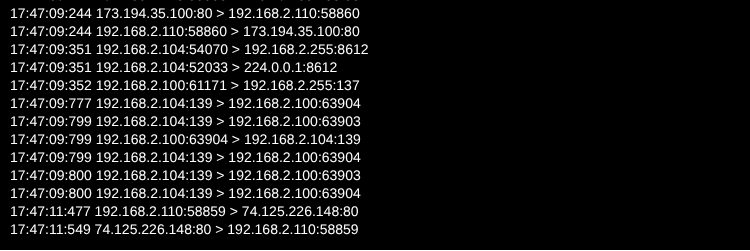
2001
Tempest for Eliza
Erik Thiele
Monitor image → AM radio transmitter
The program draws patterns on a monitor so that its emissions play tones on a nearby AM radio. It was named after Beethoven's Für Elise, the tune used to test it. It built on Pekka Riikonen's earlier tempest-AM.
→ Ubuntu manpage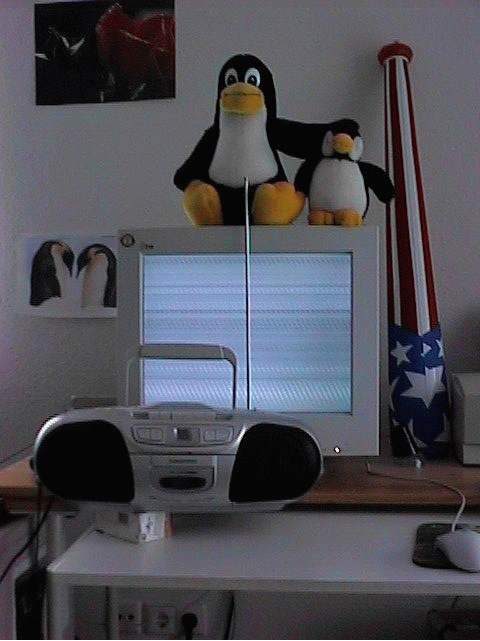
2002
Super Mario Clouds
Cory Arcangel
video game → landscape painting
Arcangel rewrote a hacked Super Mario Bros. cartridge to erase everything except the scrolling clouds. The NES becomes an ambient landscape projector.
→ Whitney Museum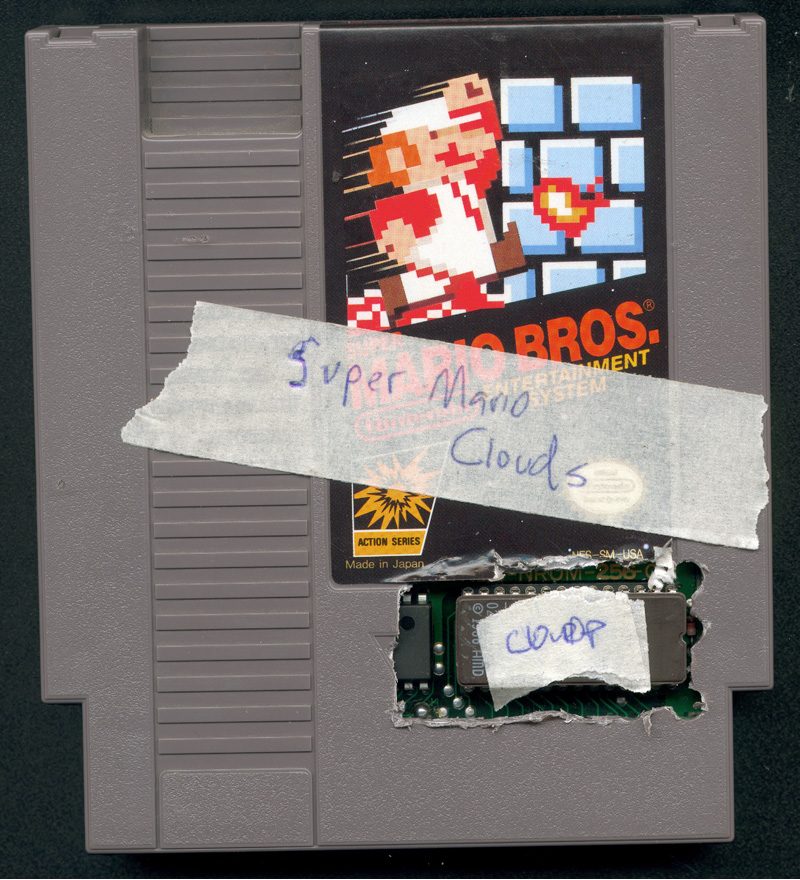
2002
My%Desktop
JODI
office desktop GUI → performance
JODI filmed their own frantic use of the Mac OS 9 desktop. What looks like system failure is user behaviour. The four-channel video is in MoMA's collection.
→ MoMA2002
forkbomb.sh
Jaromil
System-crashing code → code poem
Jaromil wrote the 13-character shell line that makes a UNIX system copy itself until it freezes, and presented it as code poetry. He also printed it on t-shirts and painted it on walls.
→ transmediale archive2002
forkbomb.pl
Alex McLean
Fork bomb → generative artwork
McLean's Perl script fills the machine with copies of itself and prints the process as a pattern of bits until the computer stalls. It was in the transmediale.02 software art award listing and is widely cited as the winner.
→ transmediale archive2002
I love you – computer_viren_hacker_kultur
Franziska Nori (curator) and Museum für Angewandte Kunst Frankfurt
Malicious code → museum exhibit
The museum showed computer viruses, their history and the aesthetics of their code as cultural objects from May to 13 June 2002. The show was part of the digitalcraft project and was sponsored by the antivirus company Symantec.
→ Wired2002
Velvet-Strike
Anne-Marie Schleiner, Brody Condon and Joan Leandre
Shooter game → anti-war graffiti space
The artists made and collected anti-war spray images for Counter-Strike, which players shot onto the game's walls instead of bullets. The project was shown at the 2004 Whitney Biennial.
→ Wikipedia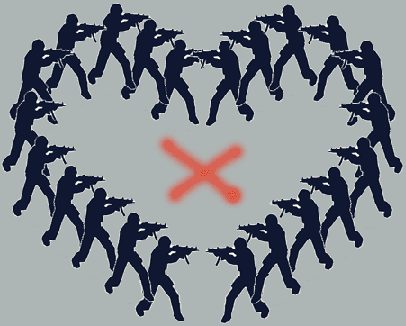
2003
CSS Zen Garden
Dave Shea
one HTML file → hundreds of designs
Launched in May 2003, the site invites designers to submit stylesheets for one and the same HTML file, so separating content from form becomes a shared game. It was inspired partly by Chris Casciano's "Daily CSS Fun" experiment.
→ Wikipedia
2003
Envisioning Emotional Epistemological Information
David Byrne
corporate presentation software → art book
Byrne used PowerPoint's charts, arrows and bullet points as artistic material: "bar charts gone awry", arrows pointing nowhere. The result was published by Steidl in September 2003 as a book with a DVD, and the first printing sold out by mid-December.
→ Edward Tufte2003
runme.org
Olga Goriunova, Alexei Shulgin, Amy Alexander, Florian Cramer, Alex McLean, Matthew Fuller et al.
Software download archive → curated art repository
runme.org launched in January 2003 as an open, tagged repository where anyone could submit software art. It grew out of the read_me festivals.
→ Rhizome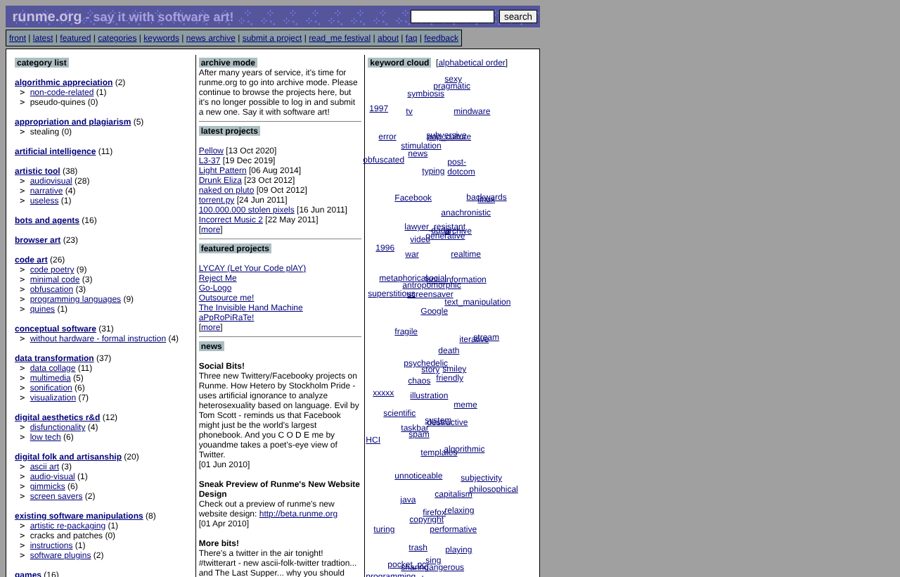
2003
Nike Ground
0100101110101101.org and Public Netbase
Corporate branding campaign → public hoax
An info container and website announced that Vienna's Karlsplatz would be renamed Nikeplatz and get a giant swoosh monument. Nike threatened legal action against the fake campaign.
→ 0100101110101101.org2005
The Million Dollar Homepage
Alex Tew
web page pixel grid → real-estate market
A 21-year-old student sold a 1000×1000-pixel homepage at $1 per pixel and grossed $1,037,100. Today it doubles as a monument to link rot: by 2017, 547 of 2,816 original links were dead.
→ Wikipedia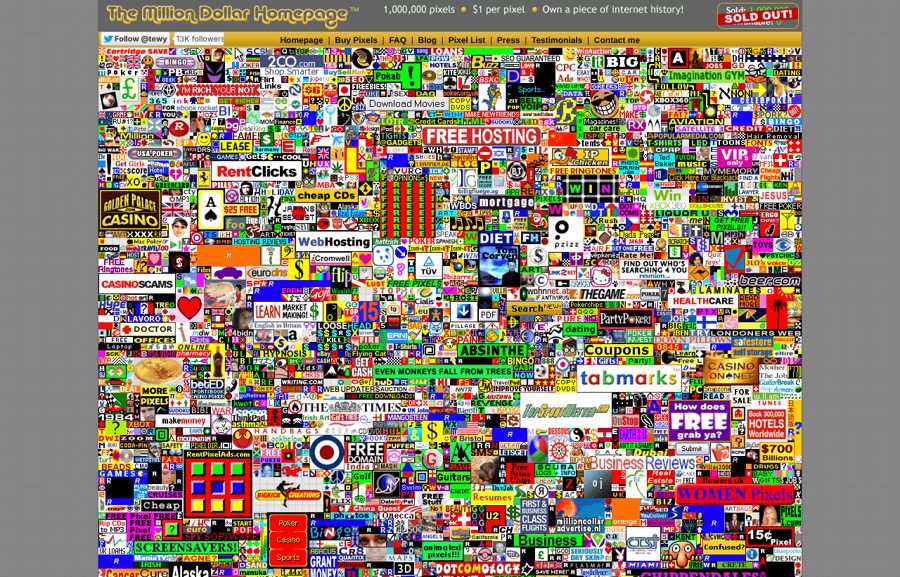
2005
Google Will Eat Itself
UBERMORGEN (Hans Bernhard, lizvlx) with Alessandro Ludovico & Paolo Cirio
ad-revenue system → machine for buying Google
Hidden websites run Google AdSense ads, and the income buys Google shares for "Google To The People Public Company". Google slowly pays for its own takeover.
→ Rhizome ArtBase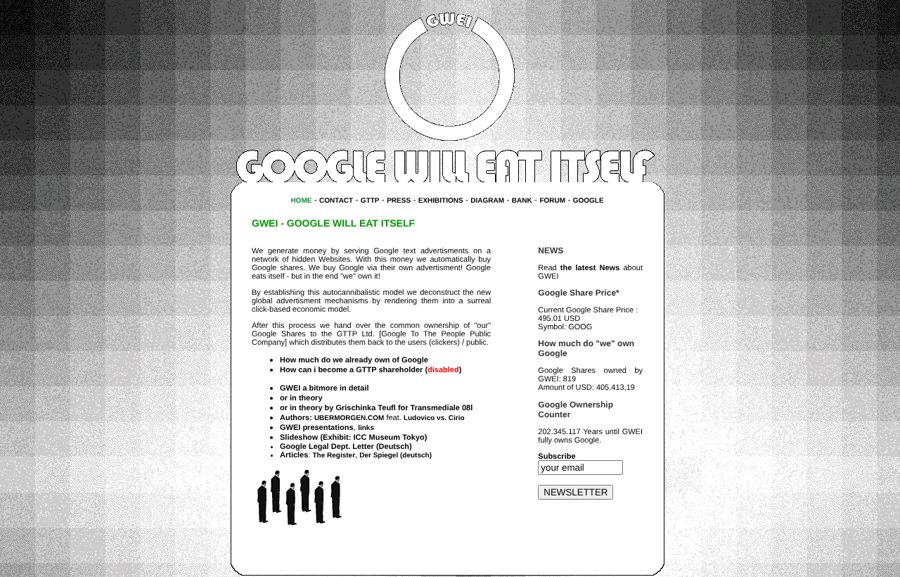
2005
Beacon
Thomson & Craighead
Web search queries → railway departure board
Live search terms typed by people around the world appear in real time on a station-style flap display. The work turns private searching into a public announcement.
→ Thomson & Craighead2006
Print Party
Open Source Publishing (Harrisson, Femke Snelting)
designing alone at the computer → public party
On 7 July 2006, at the Quarantaine bookshop in Brussels, OSP made a booklet in public, "How To Print A Booklet In 19 Easy Steps", using only free software and showing every detour. Kate Rich mixed Open Cola cocktails and a DJ played.
→ Constant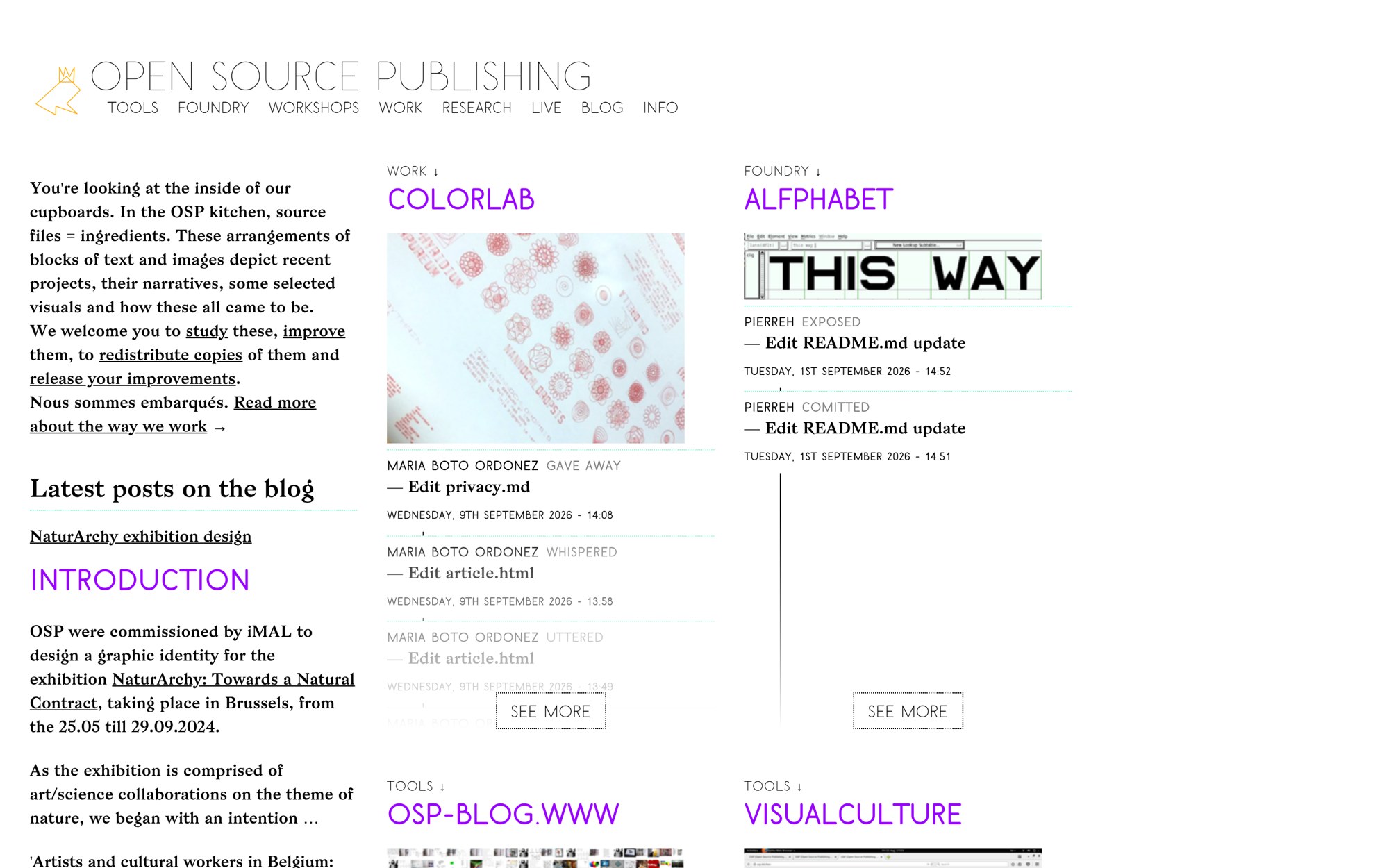
2006–
dead-in-iraq
Joseph DeLappe
US Army recruitment shooter → war memorial
From March 2006, DeLappe logged into America's Army and, instead of playing, typed into the game chat the names of US service members killed in Iraq. By September 2006 he had entered 1,273 names, often to hostile replies.
→ Salon2006–
Map
Aram Bartholl
interface icon → public sculpture
A life-size red Google Maps pin stands at the exact spot Google marks as a city's centre, turning a "15-pixel computer icon" into an object. Versions followed in Berlin, Taipei, Arles, Kassel and, permanently, Arnsberg (2019).
→ arambartholl.com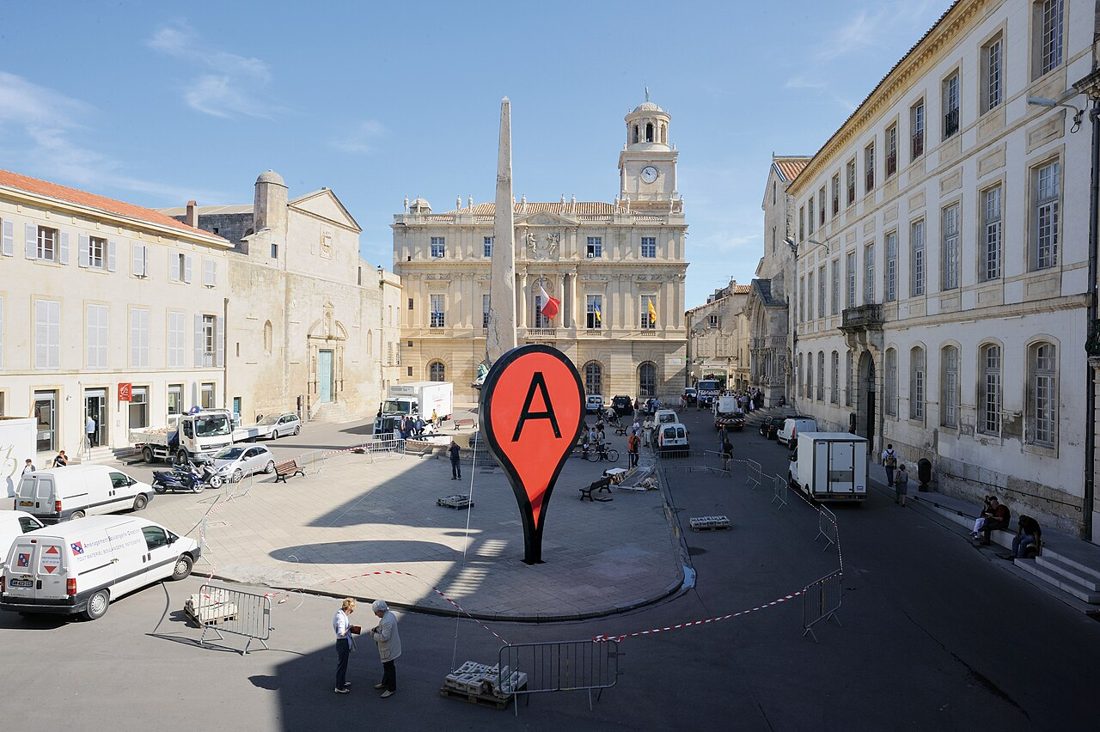
2006
Code performances in Second Life
Gazira Babeli
Virtual world scripting → performance art
The avatar artist Gazira Babeli used scripts to make pizzas fly, giant soup cans attack and self-replicating objects take over in Second Life. She released her code under a Creative Commons licence.
→ We Make Money Not Art2007–
Photoshop Gradient Demonstrations
Cory Arcangel
default image-editing tool → colour-field painting
Each large print is a single mouse drag of a default Photoshop gradient. The title records the recipe: settings and mouse coordinates, so anyone could in principle repeat the work.
→ Phillips2007–14
@everyword
Allison Parrish
status updates → conceptual poem
A Twitter bot posted every word of an English word list, one at a time, for seven years: about 109,000 posts to about 95,000 followers. Single words became accidental commentary when retweeted in context.
→ Engadget2008–
9 Eyes
Jon Rafman
mapping service → found-photography archive
Rafman screenshots strange scenes captured automatically by Google Street View's nine-lens cameras. He circulates them as blogs, books and prints in the tradition of street photography.
→ Rhizome Net Art Anthology2008
Craft
Linus Åkesson (lft)
General-purpose 8-bit microcontroller → VGA video and sound generator
Craft runs on an ATmega88 microcontroller at 20 MHz, a chip with no video or sound hardware. The processor generates the VGA signal in software, timed to the display line by line, and synthesises four-channel audio in the gaps between lines; the serial port is reused to draw high-resolution text. It won the Console / Real Wild competition at Breakpoint 2008.
→ Linus Åkesson2009
Elevated
Rgba and TBC
Game graphics hardware → procedural landscape film generated from 4 KB
Elevated is a 4-kilobyte Windows program that generates a camera flight over a mountain landscape, with music, entirely at run time. It was coded by iq and Mentor, with music by Puryx, and won the PC 4k intro competition at Breakpoint 2009.
→ pouet.net2010
Autosummarize
Jason Huff
office summary feature → literary condensation machine
Huff ran the 100 most-downloaded copyright-free books through Microsoft Word's AutoSummarize, cutting each to ten sentences, and published the results as a book.
→ The Rumpus2010
The Collapse of PAL
Rosa Menkman
compression artefacts and broken devices → audiovisual requiem
An audiovisual performance that mourns the analogue PAL colour standard through video bending and DV-compression artefacts. In the same year Menkman's Glitch Studies Manifesto framed such errors as an aesthetic.
→ Rhizome ArtBase2010
The Revolving Internet
Constant Dullaart
search homepage → kinetic artwork
The Google homepage rotates continuously while search still works, set to "Windmills of Your Mind".
→ Rhizome Net Art Anthology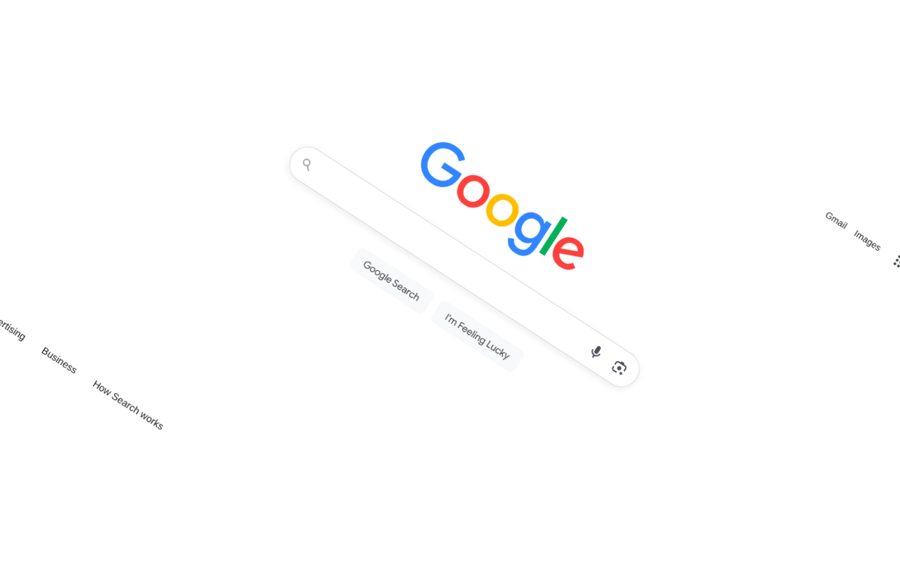
2010/12
American Psycho
Mimi Cabell, Jason Huff
Gmail contextual ads → a novel's footnotes
The artists e-mailed Bret Easton Ellis's novel to themselves page by page, kept the ads Gmail served next to each page and deleted the text. The 408-page book, published by Traumawien in 2012, has only chapter titles and ads as footnotes.
→ Wikipedia2010
Graffiti Markup Language (GML)
FAT Lab (Evan Roth, Jamie Wilkinson, Theo Watson, Chris Sugrue, Golan Levin)
XML data format → graffiti archive
GML stores graffiti tags as motion data, meaning coordinates and timing, so they can be replayed, analysed or drawn by robots. The spec was opened in 2009 and launched in January 2010.
→ jamiedubs.com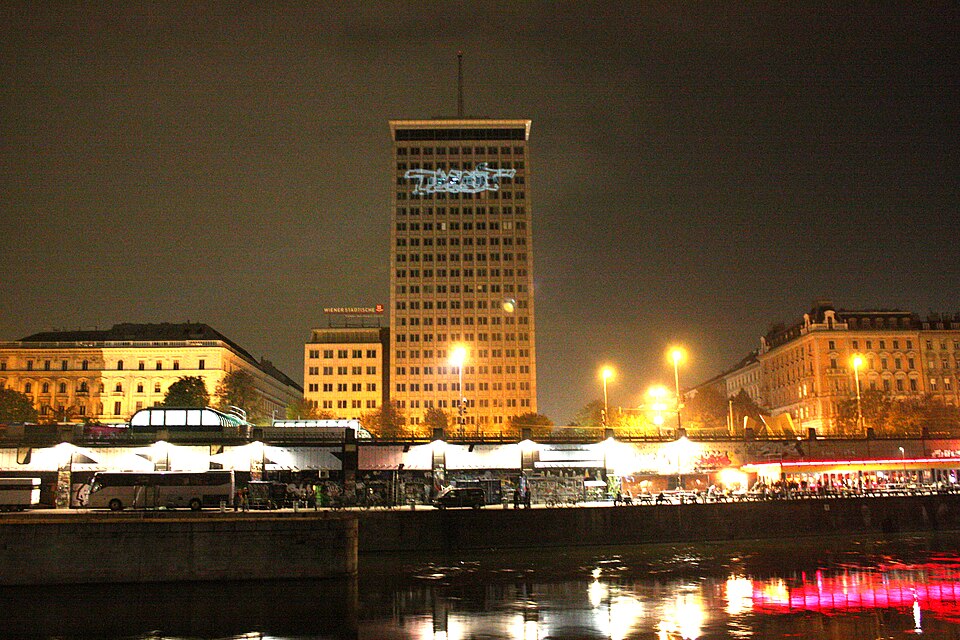
2010
Pixelsort (ASDFPixelSort)
Kim Asendorf
Sorting algorithm → glitch image effect
Asendorf's Processing script sorts the pixels of a photo by brightness along its rows and columns. The streaked images became a widely copied glitch-art style.
→ GitHub2010
Condor Cluster
US Air Force Research Laboratory
Games console → military supercomputer
The AFRL in Rome, New York, linked 1,760 PlayStation 3 consoles with GPUs and servers into a supercomputer of about 500 TFLOPS. It cost about 2 million dollars. The lab called it the fastest interactive computer in the Defense Department.
→ GamesRadar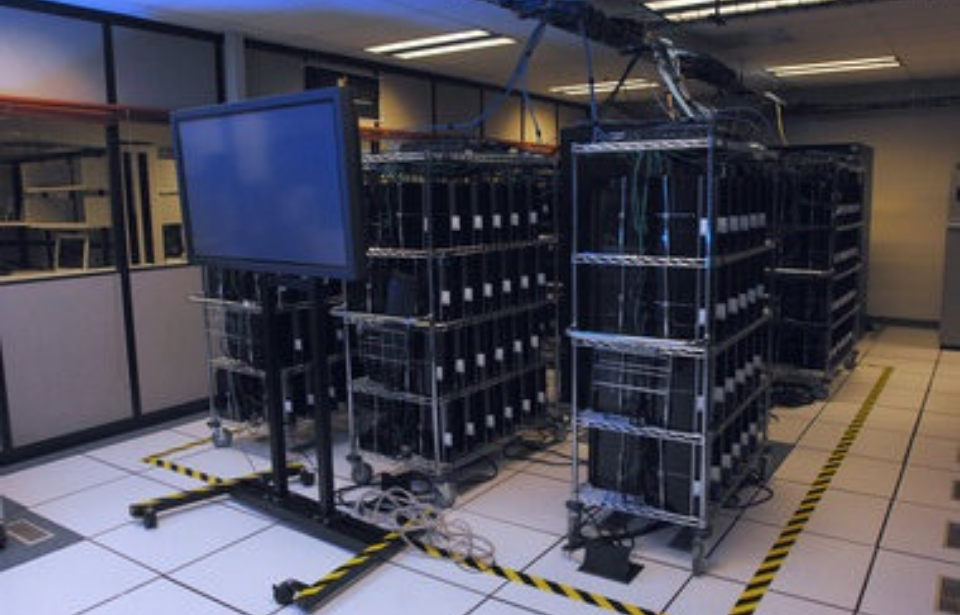
2011
Newstweek
Julian Oliver and Danja Vasiliev
Wi-Fi hacking attack → news-editing device
A device disguised as a plug adapter intercepts traffic in public Wi-Fi hotspots and changes headlines on major news sites. Readers see altered news without knowing it.
→ Newstweek2011
Floppotron
Paweł Zadrożniak
Floppy drive stepper motors → musical instrument
Zadrożniak built the first Floppotron in 2011 from two floppy drives controlled by a microcontroller. It plays music through the drives' stepper motors. Later versions added hard drives and scanners, and version 3.0 from 2022 uses 512 floppy drives.
→ Wikipedia: Floppotron2012
PiFm
Imperial College Robotics Society
GPIO pin → FM radio station
A short program drives a Raspberry Pi GPIO pin from the clock generator at about 100 MHz and modulates it with audio. With a 20 cm wire as antenna the Pi became an FM transmitter with roughly 50 m range. No extra hardware was needed.
→ Hackaday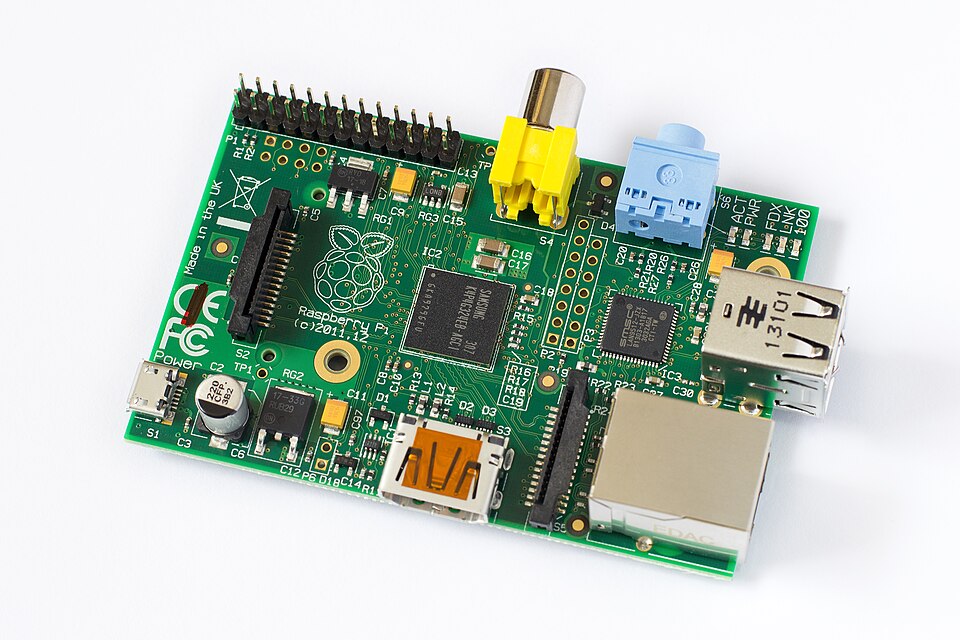
2013/14
Balsamine
OSP · Théâtre de la Balsamine
browser → layout program
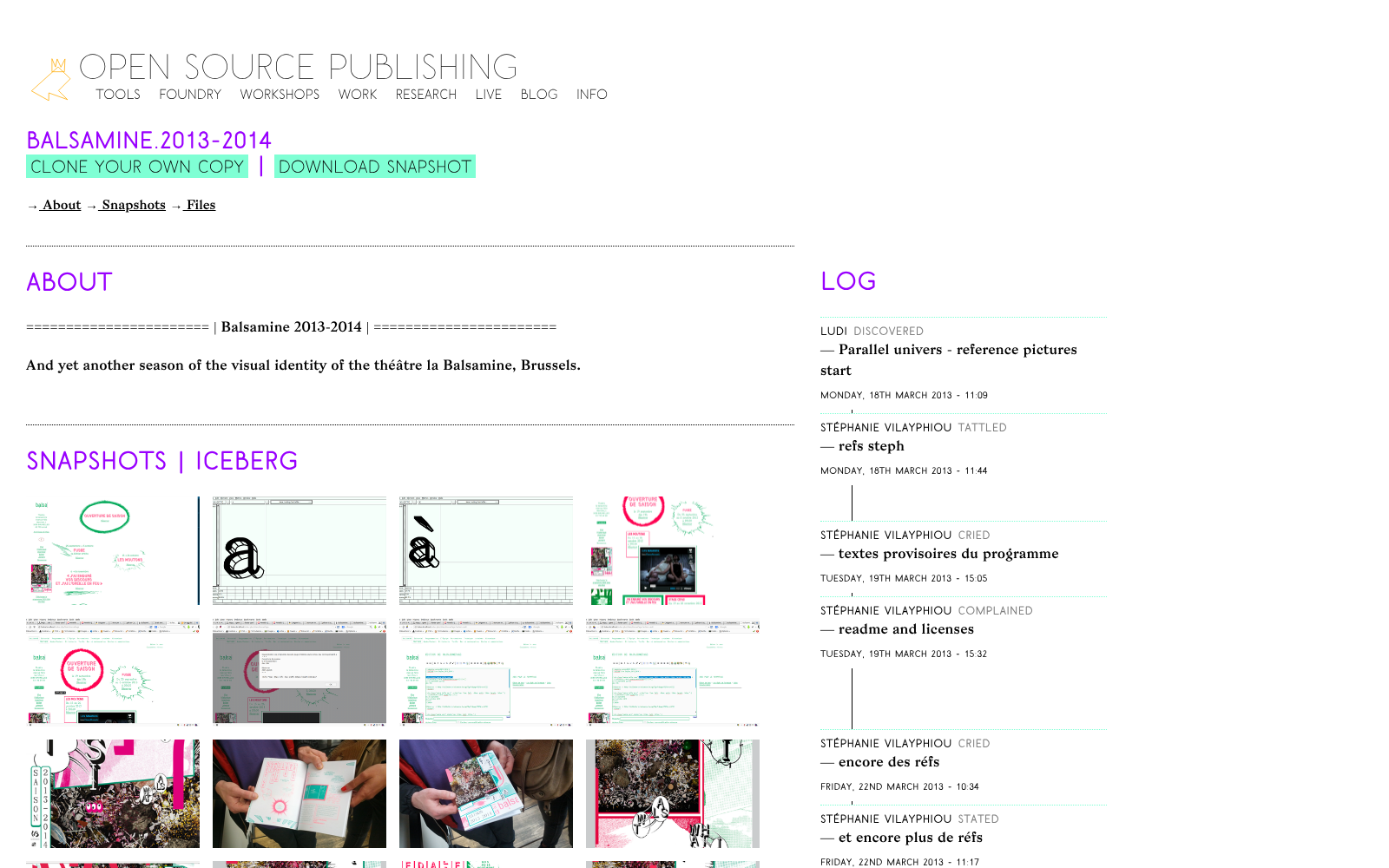
For the 2013–14 season, OSP made the theatre's programme as an HTML page and printed it from the browser (html2print), after about 2.5 years of designing Balsamine material with other software. The repository calls it the "first Balsa programme done with a browser".
→ OSP blog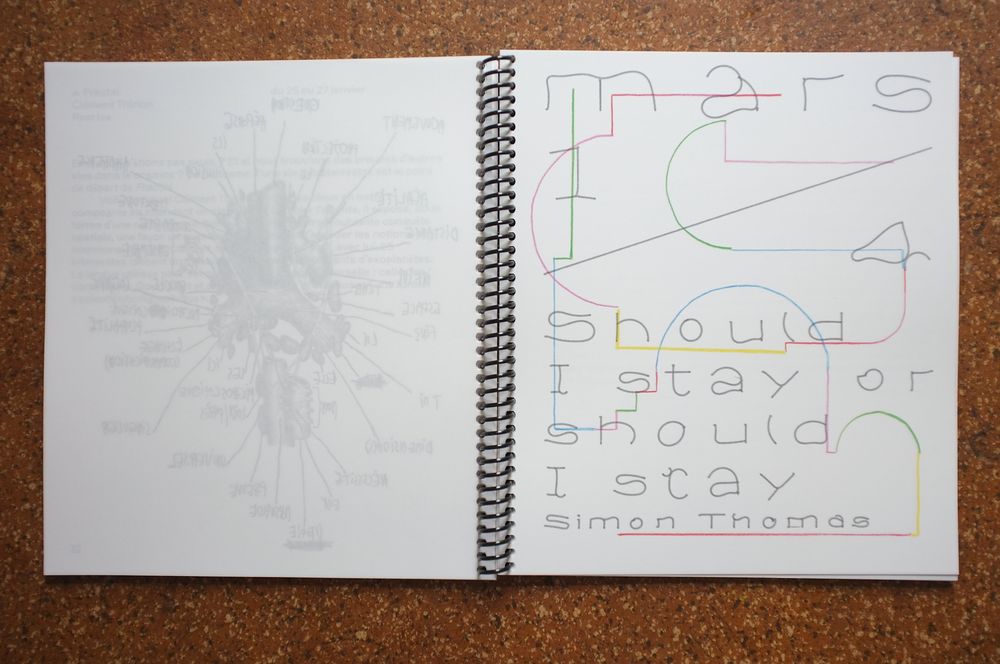
2013/15
Library of the Printed Web & Print Wikipedia
Paul Soulellis; Michael Mandiberg
print-on-demand → artist's book
Soulellis began collecting artists' books printed from the web under the name Library of the Printed Web around 2013, and MoMA Library acquired the collection in January 2017. In 2015 Mandiberg's software set the entire English Wikipedia as 7,473 volumes for print-on-demand; part of it was shown at Denny Gallery, New York (artnet).
→ Are.na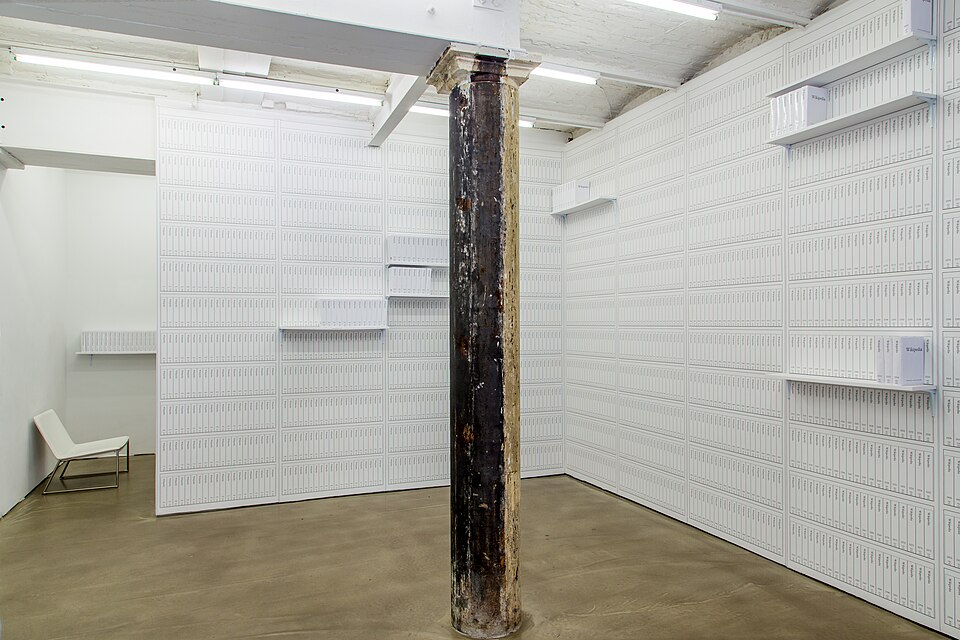
2013
Printing out the Internet
Kenneth Goldsmith with LABOR and UbuWeb
home printer → crowdsourced installation
In memory of Aaron Swartz, Goldsmith asked the public to print out "the internet" and send it to LABOR, Mexico City, from 26 July to 30 August 2013. About 20,000 contributors sent a reported ten tons of paper, including some 250,000 pages of JSTOR articles.
→ LABOR2013
NaNoGenMo
Darius Kazemi (Tiny Subversions)
human novel-writing challenge → code that writes novels
Kazemi turned National Novel Writing Month around: participants spend November writing code that generates a novel of 50,000+ words and share both. Kazemi's own example: "It could be 50,000 repetitions of the word 'meow'."
→ GitHub2014
Twitch Plays Pokémon
anonymous Australian programmer
live-stream chat → collective game controller
From 12 February 2014, viewers' chat commands steered Pokémon Red on a live stream, with up to about 121,000 concurrent participants. The crowd finished the game on 1 March 2014, and Guinness counted 1,165,140 participants.
→ Wikipedia2014/15
Random Darknet Shopper
!Mediengruppe Bitnik
darknet marketplace → art acquisition by chance
With $100 in Bitcoin per week, a bot bought one random item from a darknet market and had it shipped to Kunst Halle St. Gallen from October 2014 to January 2015. Its purchases included ten ecstasy pills. Police seized the bot, and the charges were later dropped.
→ EPFL2014
Abstract Browsing
Rafaël Rozendaal
Web pages → abstract compositions
A Chrome extension replaces any web page with flat coloured blocks that follow its layout. Rozendaal later had some of the results woven as Jacquard tapestries.
→ Abstract Browsing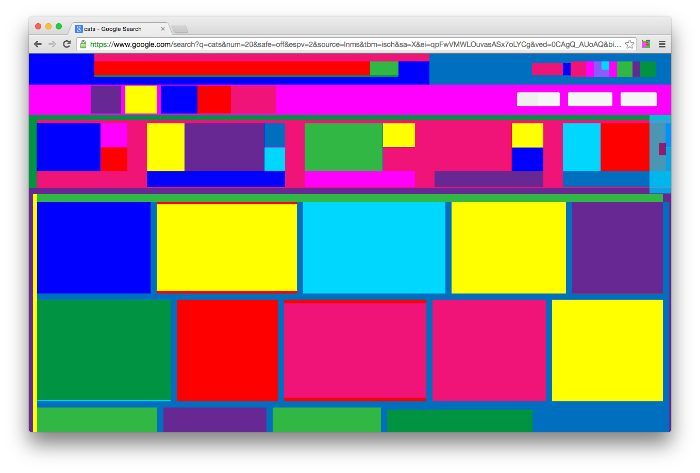
2014
AirHopper
Mordechai Guri et al. (Ben-Gurion University)
Screen cable → FM transmitter for data theft
Researchers showed that malware can make a computer's display cable emit FM radio signals. A nearby phone's FM receiver decodes them, leaking data from an isolated air-gapped machine.
→ arXiv 1411.02372014
Bad Apple 64
Onslaught (Algorithm)
1982 home computer and floppy drive → full-motion video player
Bad Apple 64 plays the shadow-art music video Bad Apple!! on an unmodified Commodore 64. More than 2000 frames, each compressed to about 70 bytes, fit on one floppy disk and are streamed from it at 12 frames per second.
→ Indie Retro News2015
Sans Bullshit Sans
Roel Nieskens
OpenType ligatures → censorship and satire tool
The font's ligature table maps buzzwords such as "synergy" to a single redaction-bar glyph, so typing them blanks them out. It needs no CSS or JavaScript, "but plain ol' OpenType font technology".
→ Pixelambacht
2015
Strava art
Stephen Lund
fitness tracker → city-scale drawing tool
On 1 January 2015 a cyclist in Victoria, BC rode a route that made his Strava map read "Happy 2015". He went on to plan rides, averaging about 70 km each, whose GPS lines form pictures.
→ CBC2015
8088 MPH
Hornet, CRTC and Desire
1981 IBM PC office graphics card with 16 colours → 1024-colour display
8088 MPH runs on the original IBM PC with a 4.77 MHz 8088 processor and a CGA card documented with 16 colours. By abusing the 80x25 text mode and the colour signal of the composite output, it shows 1024 colours and plays four-channel music through the PC speaker. It won the oldskool demo competition at Revision 2015, and no emulator of the time could run it correctly.
→ Trixter2016
Fansmitter
Mordechai Guri et al. (Ben-Gurion University)
Cooling fan → acoustic data transmitter
Malware changes the speed of a computer's CPU and chassis fans so their noise carries binary data. A nearby phone microphone can receive it at up to 900 bits per hour. The attack works on computers with no speakers.
→ arXiv 1606.059152016
System Bus Radio
William Entriken (fulldecent)
Memory access → AM radio transmitter
The program writes to memory in timed patterns so the computer's system bus emits signals an AM radio can pick up, around 1580 kHz on the author's set. It plays simple tunes without any radio hardware. A browser version also exists.
→ GitHub README2016
Stealth Cell Tower
Julian Oliver
Office printer → covert GSM base station
Oliver hid a Raspberry Pi, a BladeRF radio and GSM base-station software inside an HP office printer. It sends nearby phones messages that pretend to come from friends, prints the conversations, and calls phones to play Stevie Wonder.
→ Hackaday2017
PowerPoint is Turing complete
Tom Wildenhain
presentation software → universal computer
A Carnegie Mellon student showed a Turing machine built only from PowerPoint's on-click animations, with no macros. He presented it as "On the Turing Completeness of PowerPoint" at the joke conference SIGBOVIK in April 2017.
→ Boing Boing2017/18
1 the Road
Ross Goodwin
car with camera, mic and GPS → author
In March 2017 Goodwin drove from New York to New Orleans while a neural network wrote text in real time from a trunk-mounted camera, a microphone, GPS and the clock, echoing Kerouac. The book was published by Jean Boîte Éditions in 2018.
→ Wikipedia2017
A Mind Is Born
Linus Åkesson (lft)
Commodore 64 → complete audiovisual work in 256 bytes
A Mind Is Born is a 256-byte program for the Commodore 64 that generates both a two-minute piece of music and its synchronised visuals. It won the Oldskool 4K Intro competition at Revision 2017, entered there because no 256-byte category existed. It ends by resetting the computer, so the boot screen becomes part of the piece.
→ Linus Åkesson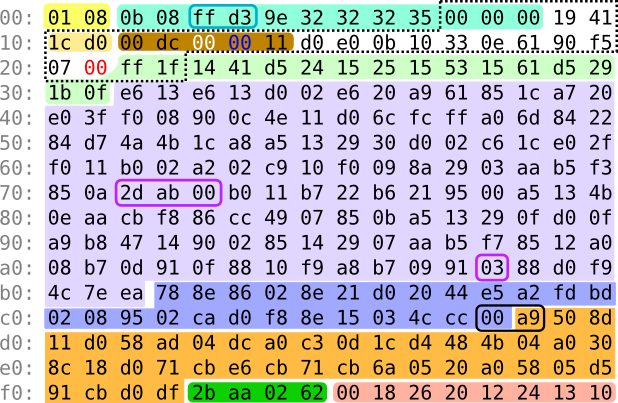
2018
Radical Speed Software
Dorian Delnon, Silvan Possa (BA Visual Communication, ZHdK)
Facebook recommendations → book layout
Two Facebook profiles each received ten likes, and a month of the platform's recommendations was archived. Layout scripts set profile 1 always on the left and profile 2 on the right, and the script itself is printed at the end of the book.
→ Schmidt, De Gruyter2018
Pure CSS Francine
Diana Smith
stylesheet language → Baroque-style oil portrait
Smith hand-types painterly portraits in HTML and CSS, without images or libraries; one runs to 1,968 lines of CSS. Built for Chrome, the works fall apart in other browsers, so the browser becomes part of the piece.
→ Waxy.org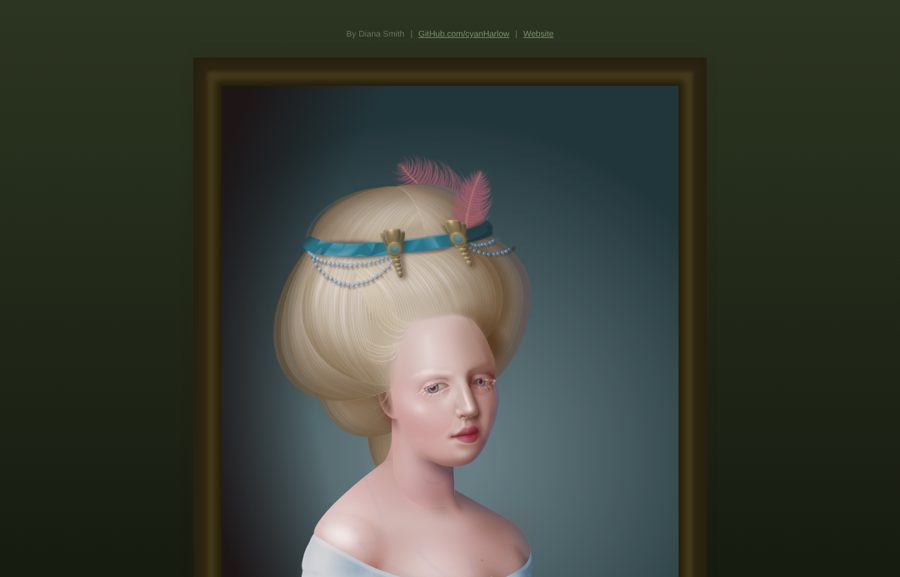
2018
osmo-fl2k
Steve Markgraf (Osmocom)
USB-to-VGA adapter → radio transmitter
Software for cheap FL2000 USB-to-VGA adapters turns off the blanking intervals and streams raw samples from memory. This turns the adapters into low-cost software-defined radio transmitters. It was released at OsmoDevCon in April 2018.
→ Harald Welte blog2020
Google Maps Hacks
Simon Weckert
live traffic layer → fake traffic jam
Weckert pulled 99 second-hand smartphones running Google Maps in a handcart through quiet Berlin streets. Google Maps read them as congestion and turned the empty streets red. The work won a Social Impact Award at the 24th Japan Media Arts Festival.
→ Artnet News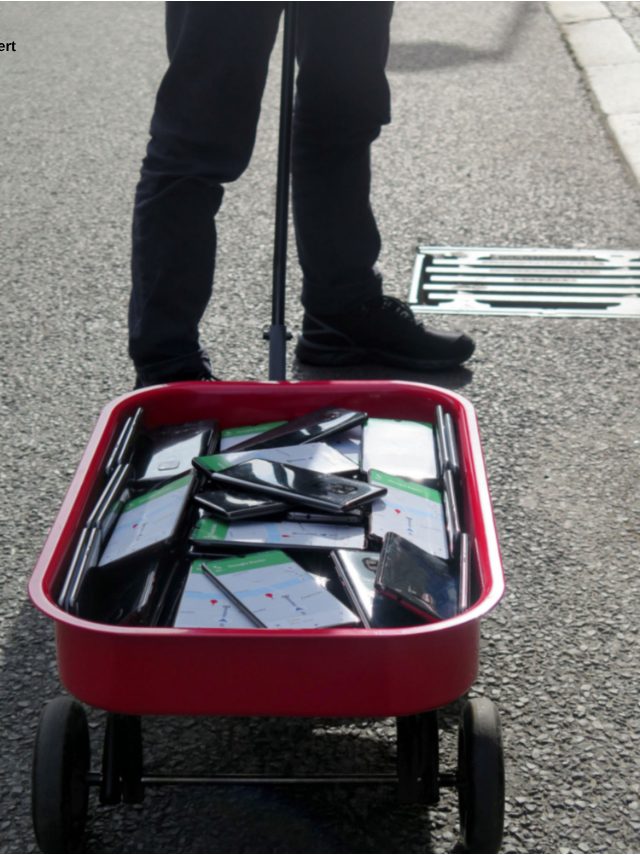
2020
The Uncensored Library
Reporters Without Borders with BlockWorks
sandbox game → library of censored journalism
Banned articles are stored as in-game books in a large Minecraft library, because the game often stays accessible where news sites are blocked. Its wings, mostly one per country, hold around 300 books.
→ Minecraft.net2020
Animal Crossing protests
Hong Kong pro-democracy protesters
cosy island-life game → protest space under lockdown
Protesters decorated their Animal Crossing: New Horizons islands with slogans and images mocking Xi Jinping and Carrie Lam. Around 10 April 2020, Chinese platforms removed listings for the game; whether the protest caused the removal is unconfirmed.
→ South China Morning Postby 2020
Very Responsive
Yehwan Song
responsive-design rule → play
Song takes the rule "adapts to any width" literally: an animated portrait folds, squeezes and becomes another face as the window changes. It was documented in February 2020, but no creation year was found.
→ It's Nice That2020
Demoscene as national intangible cultural heritage
Art of Coding initiative
Subculture that grew out of software cracking → nationally recognised living heritage
Finland added the demoscene to its national inventory of living heritage in April 2020, the first country to do so. Germany followed in 2021, then Poland, the Netherlands, Switzerland, Sweden, France and Norway, following the UNESCO Convention for intangible cultural heritage.
→ Art of Coding2021
Fontemon
Michael Mulet
OpenType font file → playable video game
A Pokémon-style game made entirely of a font: each keypress triggers a ligature substitution that swaps in the next "frame" glyph. It has 4,696 frames and 43 choices, and the game page reads "no javascript, no html, all font".
→ PC Gamer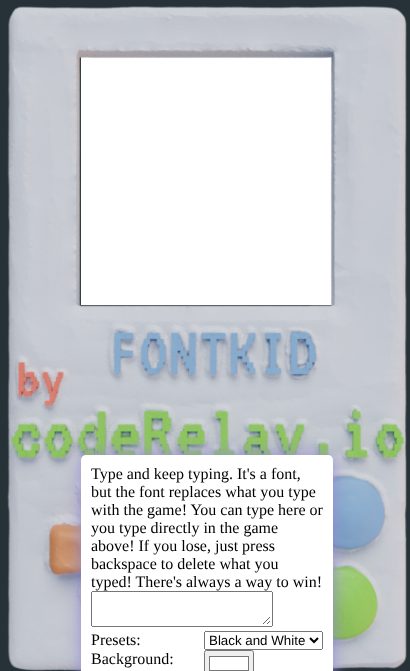
2022
Area 5150
CRTC and Hornet
1981 IBM PC and CGA card → effects long considered impossible on it
Area 5150 runs on a 4.77 MHz IBM PC with a CGA card and shows graphics that the original hardware was thought unable to produce. Made largely by the 8088 MPH team, it won the alternative demo competition at Evoke 2022 in Cologne.
→ pouet.net2024
llama.ttf
Søren Fuglede Jørgensen
font file → language model
HarfBuzz lets fonts run WebAssembly code while shaping text. llama.ttf packs a 15-million-parameter language model into a valid TrueType font, and typing exclamation marks makes the font generate text. Strachey in reverse: the typeface itself writes.
→ Hackaday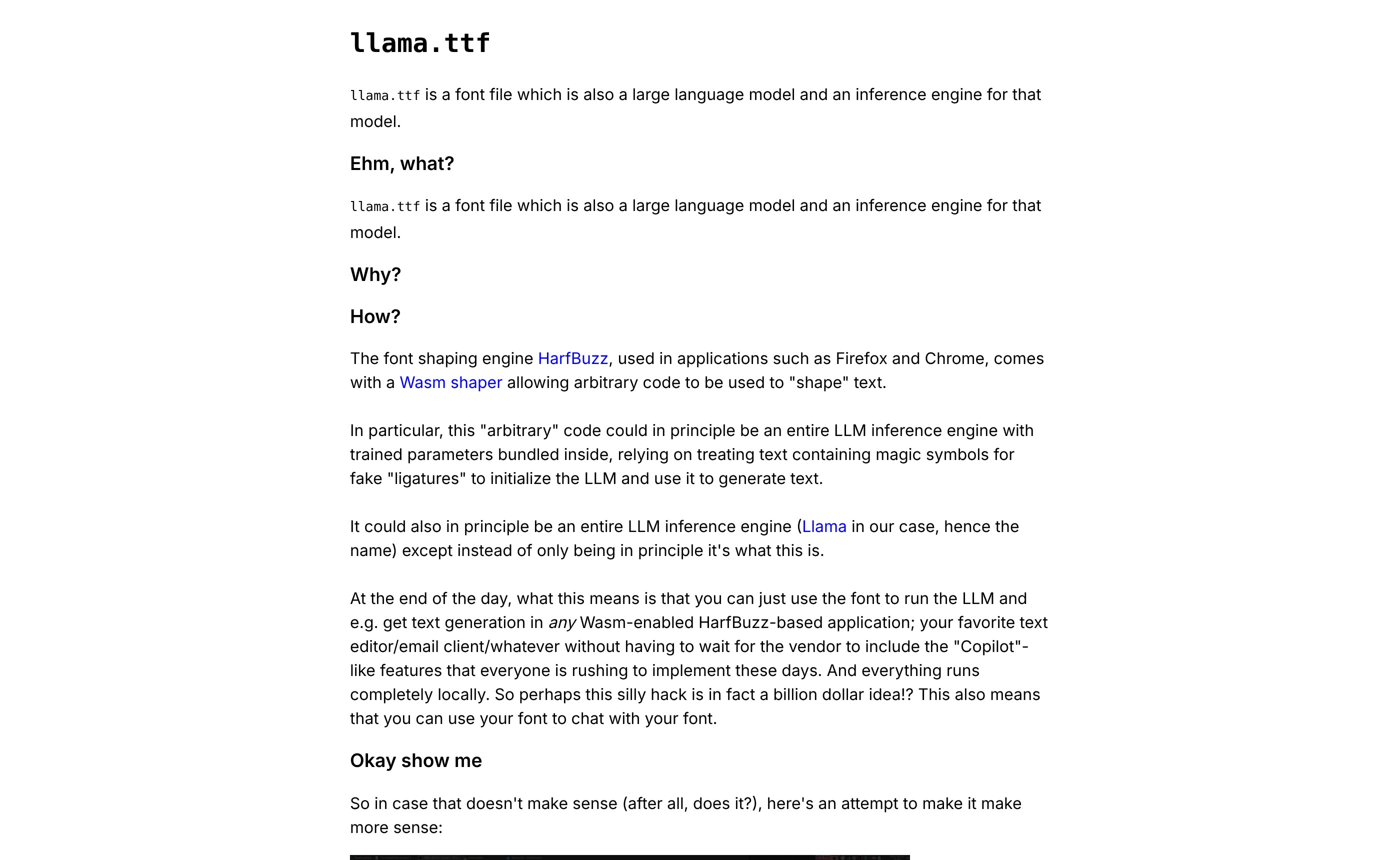
2025
DoomPDF / LinuxPDF
ading2210
static document format → game console and computer
A high-school student used the JavaScript built into the PDF format to run Doom inside a PDF, with a monochrome text-like display. A month later he booted a RISC-V Linux inside a PDF.
→ GitHub